Emily Dickinson's poem personifies the bird by giving it human-like awareness, intention, and social behavior. The clearest example is the line 'He did not know I saw,' which attributes to the bird a conscious sense of being watched (or not). That's personification: a nonhuman subject given human interiority. You'll find similar moves throughout the poem, and once you know what to look for, they jump off the page.
Explain Personification in A Bird Came Down the Walk
Maya Hartwell
6 Jun 2026
Personification in plain words
Personification is a figure of speech where a nonhuman thing (an animal, an object, an idea) is described as if it were a person. Cambridge Dictionary puts it simply: it gives human qualities to something that is not human. Poetry Foundation frames it the same way, defining it as describing 'an abstraction, a thing, or a nonhuman form as if it were a person.' The key word in both definitions is human. Not just vivid. Not just visual. The text has to be doing something specific: assigning the nonhuman subject human traits, thoughts, feelings, or socially recognizable behavior.
This matters a lot when you're doing analysis, because students often call every colorful description 'personification.' It isn't. Saying a bird has 'velvet eyes' is imagery. Saying a bird 'did not know I saw' is personification. The difference is whether the line is doing sensory description or assigning human awareness and intention.
Why Dickinson personifies the bird in this poem
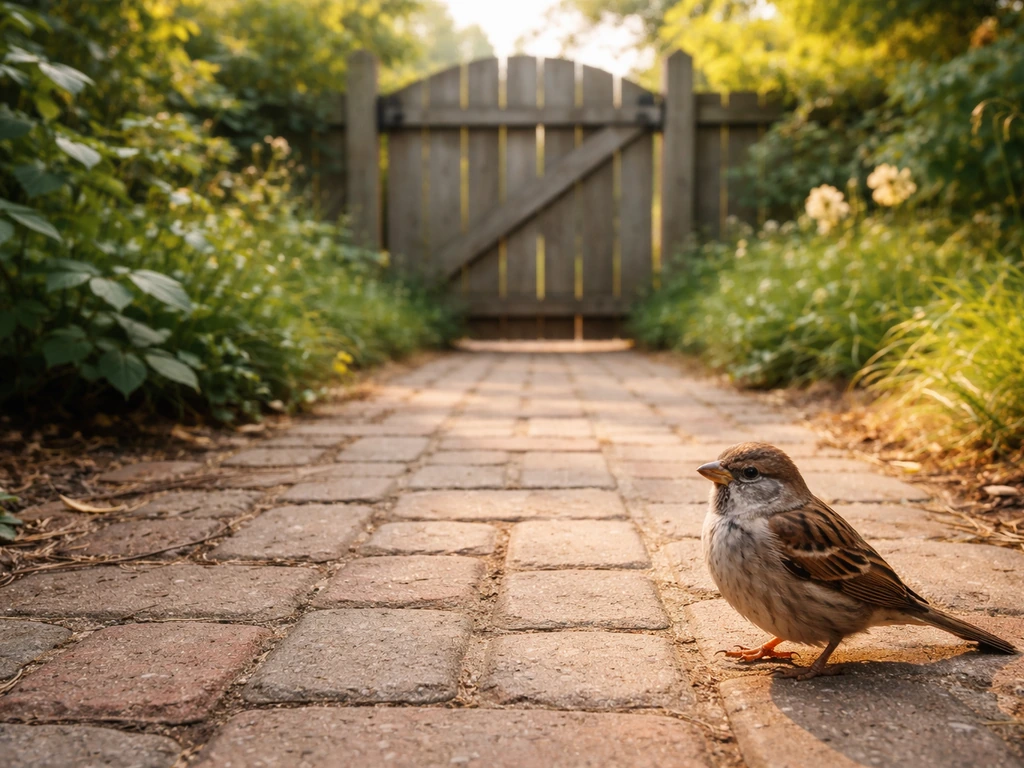
Dickinson is staging an encounter between a speaker and a wild creature in an ordinary domestic setting. By giving the bird human-like traits, she creates intimacy. The bird isn't just passing through the garden; it becomes a character with something like inner life. That shift pulls the reader into a small, tense drama: the speaker watches, the bird seems unaware, and the gap between human observer and nonhuman subject becomes the whole tension of the poem.
Researchers who have studied Dickinson's animal poems note that her anthropomorphism tends to be unstable rather than naively cute. She's not just saying 'look, the bird acts like a person.' She's raising a harder question: how much can we actually know about what a nonhuman creature experiences? The personification creates what scholars have called 'dual uncertainty.' It says something about human consciousness, not just bird behavior. That's a much richer reason to use this device than simple decoration.
How to spot personification in the poem
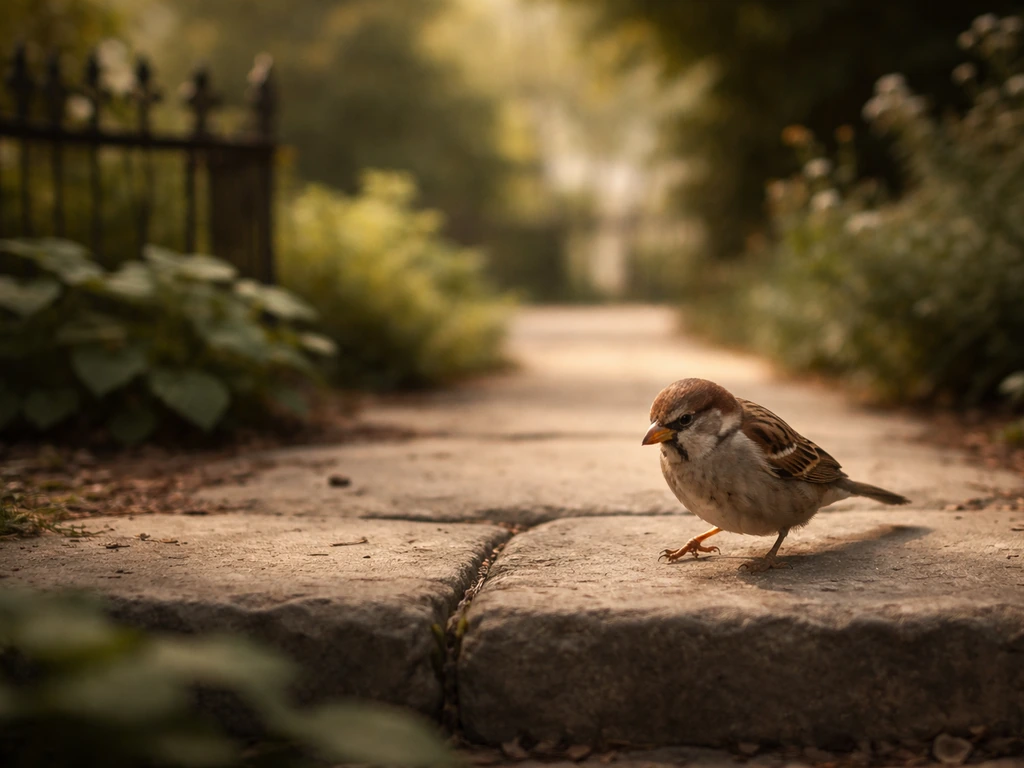
The poem is packed with human-action verbs and human-awareness framing. Here's where to look first. The bird 'came down the Walk,' which sets up a scene of purposeful, directed movement (the kind of thing a person does on a path, not just a random animal fluttering by). Then the poem gives us 'He did not know I saw,' which is the most obvious personification in the whole text. Knowing or not knowing you're being watched is a human cognitive and social experience. A bird doesn't process being observed the way a person does. Dickinson assigns that consciousness to the bird deliberately.
Further into the poem, the bird 'bowed' before hopping off. Bowing is an explicitly social, human gesture. The line 'His Bondage was unreal' attributes to the bird the human concept of bondage, a word loaded with social and emotional meaning. These aren't accidental word choices. Each one layers on another human-coded quality.
Key examples at a glance
| Line or phrase | Device | Why it qualifies |
|---|---|---|
| He did not know I saw | Personification | Attributes human-like social awareness and self-consciousness to the bird |
| He bowed | Personification | Bowing is a human social gesture; no bird bows deliberately |
| His Bondage was unreal | Personification | Bondage is a human social/emotional concept applied to the bird's condition |
| He came down the Walk | Personification (framing) | Sets the bird up as a purposeful agent on a human domestic path |
| He bit an Angle Worm in halves | Imagery | Sensory/visual description of actual bird behavior; no human trait assigned |
| And ate the fellow, raw | Imagery (with mild personification in 'fellow') | 'Fellow' adds a touch of human-social framing, but the act itself is pure sensory observation |
| Soft Silver hurrying through | Imagery / Metaphor | Visual/sensory comparison; not attributing human consciousness or action |
Personification vs. imagery vs. metaphor: don't mix them up
The confusion is real, and it trips up even careful readers. Here's the clearest way I know to separate them. Imagery is sensory. If a line makes you see, hear, smell, taste, or feel something, it's probably imagery. 'He bit an Angle Worm in halves' is imagery: you can picture it, maybe cringe at it, but the worm and the bird are just doing worm-and-bird things. No human trait is being assigned.
Metaphor compares two unlike things without using 'like' or 'as.' When Dickinson describes the bird's wings as 'Oars' dividing the ocean of air, that's a metaphor. Wings aren't literally oars, but the comparison creates a visual idea. Still not personification, because oars don't have human interiority.
Personification specifically requires a human trait, action, or inner state assigned to the nonhuman subject. LitCharts puts it well: if a nonhuman thing is described as performing a human action, that's your signal. 'Did not know I saw' passes that test immediately. 'Bowed' passes it. 'Bit an Angle Worm in halves' does not, because birds actually bite worms; there's nothing human-exclusive about that action.
Symbolism is a different category altogether. A symbol is an image that stands for something larger or abstract in a sustained way. The bird in this poem could be read symbolically (as nature, freedom, otherness), but that's an interpretive layer you add as a reader. The personification is a structural feature of how Dickinson writes the lines themselves.
A quick checklist for identifying personification fast

When you're reading quickly and need to decide fast, run through these questions in order:
- Is the subject nonhuman? (animal, object, idea) If yes, keep going.
- Does the line assign it a human action, human awareness, or human emotion? If yes, it's likely personification.
- Is the line mainly describing what something looks, sounds, or feels like? If yes, lean toward imagery instead.
- Is the line comparing the subject to something else using implied or direct comparison? If yes, check for metaphor or simile first.
- Does the human-coded word apply to something only a person could genuinely do or feel (knowing, bowing, feeling bondage)? If yes, you've got personification.
- Is the image carrying a larger abstract meaning throughout the poem? If yes, also consider symbolism, but label it separately.
The spiritual side: what a 'familiar' bird depiction can suggest
This is where the literary analysis and the bird-encounter tradition touch each other lightly. On this site, we look at bird encounters through spiritual and symbolic lenses across many traditions. What's interesting about Dickinson's poem is that its personification does something that mirrors how people often describe meaningful bird encounters in real life: the bird is given interiority, awareness, even intention. 'He did not know I saw' sounds exactly like how someone might describe a real bird visit that felt personal or intentional.
Across biblical, Celtic, and Eastern traditions, birds have long been framed as messengers or guides, creatures that carry meaning between the human world and something beyond it. The Environmental Literacy Council notes that birds are associated cross-culturally with freedom, transcendence, and guidance, though the specific meaning shifts by species, culture, and context. When Dickinson depicts a bird with human-like awareness on a domestic path, she's drawing on the same cultural instinct: the bird as a presence that meets us, that participates in the encounter rather than simply passing through it.
That said, it's worth being careful here. The personification in the poem is a literary device, not a spiritual claim. Dickinson is using human language to describe a nonhuman creature, partly because that's the only language she has, and partly to explore what human observation can and cannot know about another creature. If you're someone who finds personal meaning in bird encounters, the poem's framing may resonate with how those encounters feel: watched, witnessed, mutual. Some readers connect this feeling to the idiom “like a dog with a bird at your door,” meaning a tense situation where something unexpected keeps showing up and won’t just leave you alone. But as with any bird symbolism, blank" rel="noopener noreferrer">MeaningOra and others in the folklore tradition caution that meaning depends heavily on personal context and cultural background. The poem can open that door without forcing you through it.
What to take away and where to go next
For the literary analysis: the personification in 'A Bird Came Down the Walk' is clearest in the lines 'He did not know I saw,' 'He bowed,' and 'His Bondage was unreal.' Each one assigns the bird a human-coded trait or awareness. To confirm it's personification and not imagery or metaphor, ask yourself whether the line attributes something only a person could genuinely experience. Use the checklist above to move quickly through the poem. Keep imagery and metaphor in separate categories and label each device on its own terms.
For the deeper meaning: Dickinson's unstable anthropomorphism is doing more than making a bird cute. It's asking how much the speaker (or any observer) can really know about another living creature. That question stays open at the end of the poem, which is part of why it lingers. If you're interested in how bird encounters carry meaning beyond the page, the same tension between 'familiar presence' and 'unknowable wildness' shows up in how many traditions frame bird visits at the door, on the porch, or in a shared space as potentially significant. In some folklore, a "bird on the doorstep" is treated as a sign or message, and people often connect it to themes of timing, attention, or guidance bird on the doorstep meaning. If you are wondering about the bird on porch meaning, start by focusing on what the encounter seems to communicate in your own situation bird visits at the door, on the porch, or in a shared space. This helps explain the bird on the roof meaning people often look for in folklore and symbolism. The poem doesn't answer what a bird encounter means. It asks the question beautifully.
What does a bird's apparent awareness of you feel like in your own experience? If you’re wondering about a “bird on my balcony” moment, the same personification ideas can help you think through the meaning you assign to it bird on my balcony meaning. If you are wondering about a bird in attic meaning, the poem's idea of being witnessed can offer a useful way to think about it. That reflection is where the literary and the personal start to meet.
FAQ
How can I tell the difference between imagery and personification in this poem?
Not automatically. In this poem, personification is when Dickinson gives the bird an inner condition or social awareness (for example, being or not being aware that the speaker is watching). If a line only describes what the bird does in physical terms, like snapping at prey or moving along a path, that is more likely literal description or imagery, not personification.
Which lines are the strongest proof that the bird has human-like awareness?
Look for statements that treat observation as a two-way situation, especially words connected to knowing, awareness, or being seen (even negatively, like “not knowing”). “Did not know I saw” works because it frames the bird’s mental state. “Came down the Walk” is more action setting, so it helps you get the encounter going rather than proving interiority by itself.
Is “bowed” definitely personification, or could it be imagery?
Yes, some wording can feel ambiguous. For instance, a verb that looks human (like “bowed”) still counts as personification because it describes a recognizable human social gesture, not just a bodily movement. If you can swap the gesture into a human context without changing the meaning, you are likely looking at personification.
Why do some readers get personification wrong and call every vivid detail personification?
A common mistake is calling any “cute” or “dramatic” description personification. The better test is exclusivity: does the line assign a trait or mindset that is specifically human, such as self-awareness, cognition, intention, or emotionally loaded concepts? “His Bondage was unreal” is a strong flag because “bondage” is not a physical property of a bird, it is a human concept.
How should I discuss the effect of personification, not just identify it?
If you are writing an analysis, treat personification as more than a label. State what it changes in the encounter: it turns a passing animal into a character-like presence, which creates tension between the speaker’s watching and the bird’s apparent unawareness. Then connect that effect to the poem’s mood (small drama, uncertainty, mutual presence).
What if a line seems poetic and human-like but does not clearly show inner thoughts?
If a line uses a comparison (“wings as oars”) or a sensory-rich description, it can be metaphor or imagery even when the subject is humanized visually. Personification requires human interiority or a human social action, not just a vivid picture. So comparisons that mainly reshape what you see usually do not qualify unless they also imply thoughts or human-like knowing.
What does it mean that Dickinson’s personification creates uncertainty?
The “dual uncertainty” idea in the poem means the device does two things at once: it suggests the speaker cannot truly know what the bird experiences, and it also exposes how humans project their own consciousness onto nonhuman life. In other words, personification is part of the poem’s question about limits of knowledge, not a confident claim about the bird.
Can this poem be both personification and symbolism at the same time?
It helps to separate “device” from “meaning.” Personification is a device you can point to in wording. Symbolism is an added interpretive layer, like reading the bird as freedom or guidance. The poem can contain both at different levels, but you should not label the bird as symbolic and skip the specific personifying mechanics first.
How can I apply the poem’s personification ideas to my own experience without overstating what I know?
When you meet a bird in real life, the poem can mirror the feeling of being noticed, but that does not mean the bird truly has human awareness. A useful approach is to write your reflection as perception vs. reality: what you felt (witnessed, mutual, tense) versus what you can objectively know about the bird’s perspective.
Next Articles
Bird on Doorstep Meaning: Spiritual, Symbolic and Practical
Explore bird on doorstep meaning: spiritual omens plus practical causes and safe steps to respond.
Like a Dog With a Bird at Your Door Meaning and What to Do
Meaning of like a dog with a bird at your door, plus spiritual take and practical steps if a bird is outside.
Bird at Front Door Meaning: Practical and Spiritual Guide
What a bird at your front door means spiritually and practically, plus safety steps and how to prevent repeats.