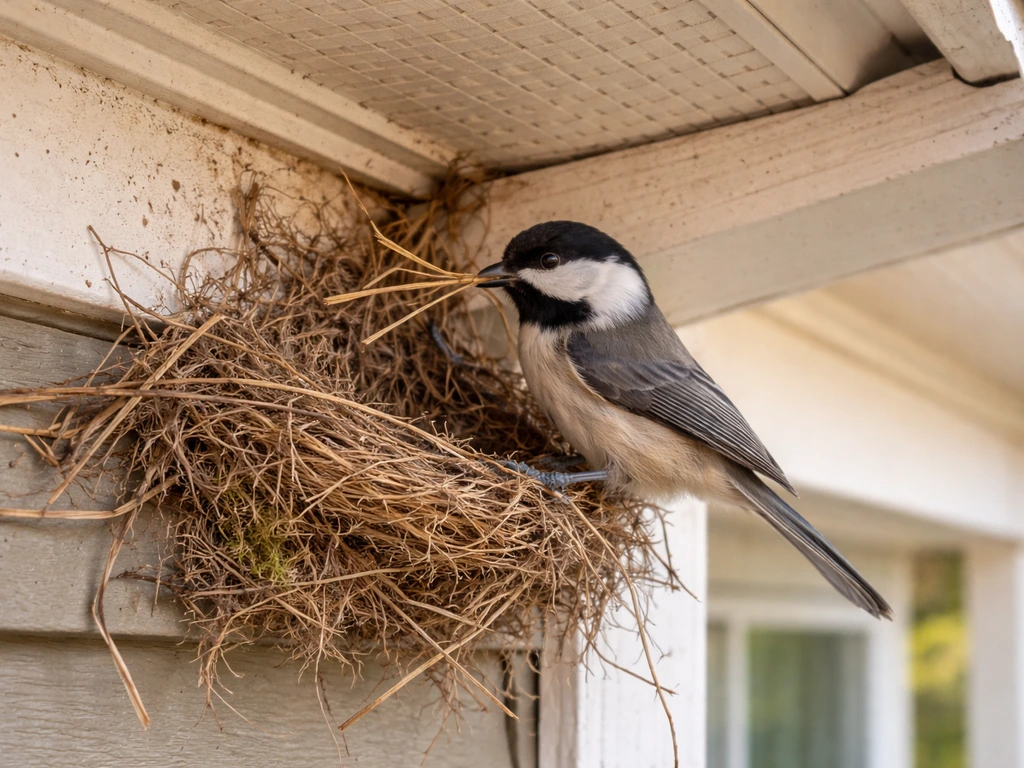
When someone says 'the bird is on the nest,' they almost always mean one thing: the bird is physically sitting atop or settled into its nest, most likely because it's incubating eggs or brooding newly hatched chicks. The behavior is often summed up as the bird is in or on the nest, meaning it is using the nest for incubation or brooding. That's the core, literal image. If you're outside and you've just spotted a bird hunkered down in a nest and wondered what it means, you're witnessing one of the most devoted acts in the natural world. And if you're here because that sight stirred something in you spiritually, you're not alone in that either.
The Bird Is on the Nest Meaning: Literal and Symbolic

Maya Hartwell
6 May 2026
What the phrase actually means in everyday use
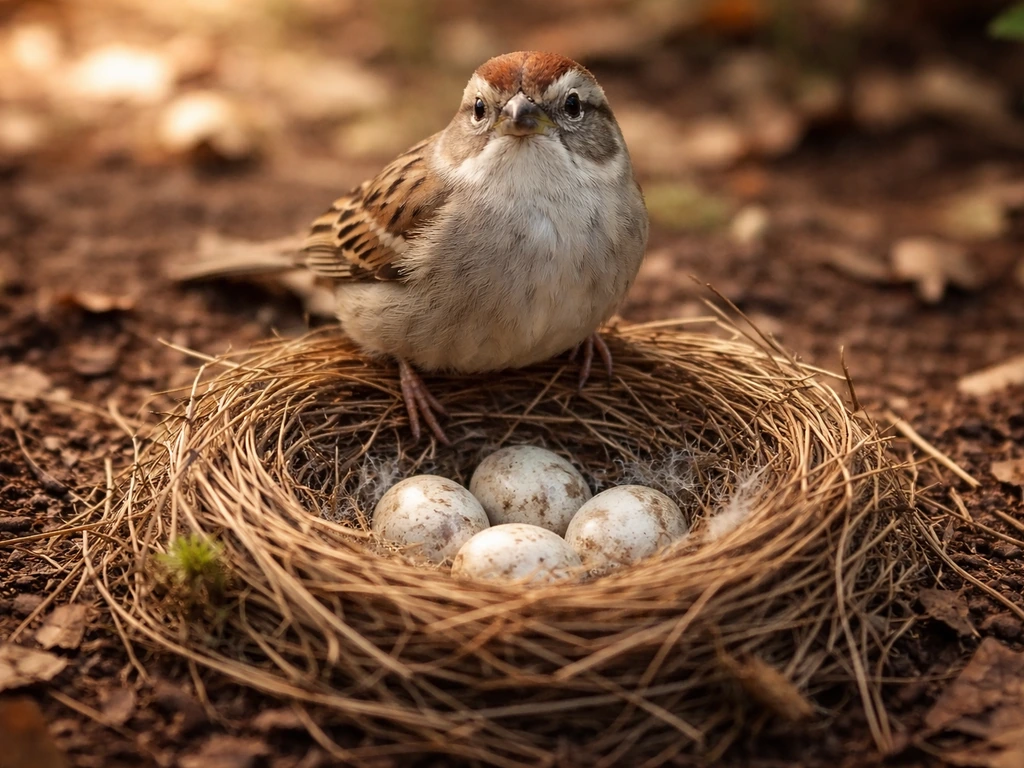
In plain English, 'the bird is on the nest' describes a bird sitting directly on top of its nest structure, usually because there are eggs or chicks beneath it that need warmth and protection. The phrasing 'the bird is in the nest' is slightly different in feel but almost identical in meaning: it implies the bird is nestled inside the cup of the nest rather than perched on top. In practice, both phrases point to the same behavior, and most English speakers use them interchangeably. Context is everything. If someone says this to you while pointing at a backyard shrub, they're telling you there's an active nest with a parent present.
The Oxford and Merriam-Webster definitions of 'nest' reinforce this: a nest is the structure a bird builds or selects specifically for laying eggs and sheltering its young. So when the bird is on or in that structure, the natural implication is that something significant is happening there, either incubation, brooding, or close tending of the next generation.
Bird nesting behavior: what you're actually watching
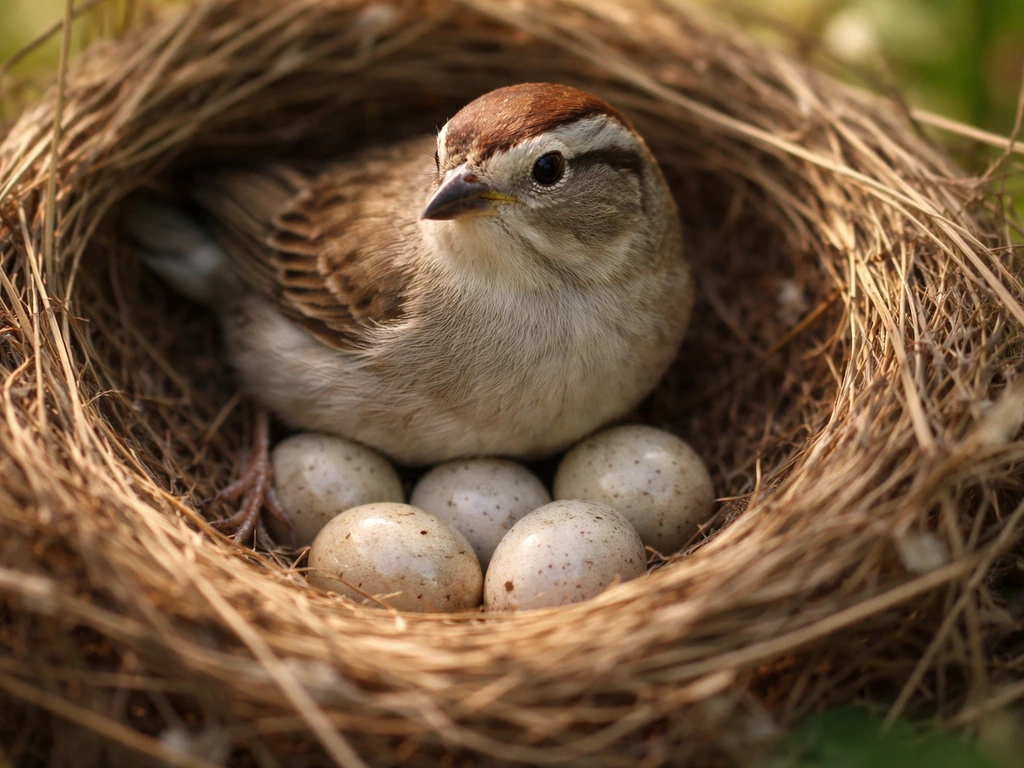
What you're seeing when a bird sits still on a nest is incubation or brooding, and it's a genuinely demanding commitment. During incubation, the parent bird uses its own body heat to keep the eggs at the precise temperature needed for the embryos to develop properly. What does it mean when a bird roosts on a nest, and how is it different from other nest behaviors? Birds raise and lower themselves over the eggs to fine-tune that warmth, and they may sit for hours at a stretch. Some species share this duty between both parents; in others, it falls almost entirely to one.
Once eggs hatch, the behavior shifts to brooding, where the parent covers the chicks to keep them warm and protected. The bird may still appear to be 'just sitting there,' but it's doing critical work. You might also notice the parent leaving briefly to forage, which is normal. Brief absences don't mean the nest is abandoned. Most incubating birds can and do leave for short windows depending on the weather and the species.
Nests are also temporary by design. Most songbird species don't reuse the same nest for multiple broods, and young birds leave the nest once they're capable of surviving outside it. This means a nest with a bird sitting in it is almost certainly an active nest, and that window of activity may be shorter than you expect.
What it can mean spiritually and symbolically
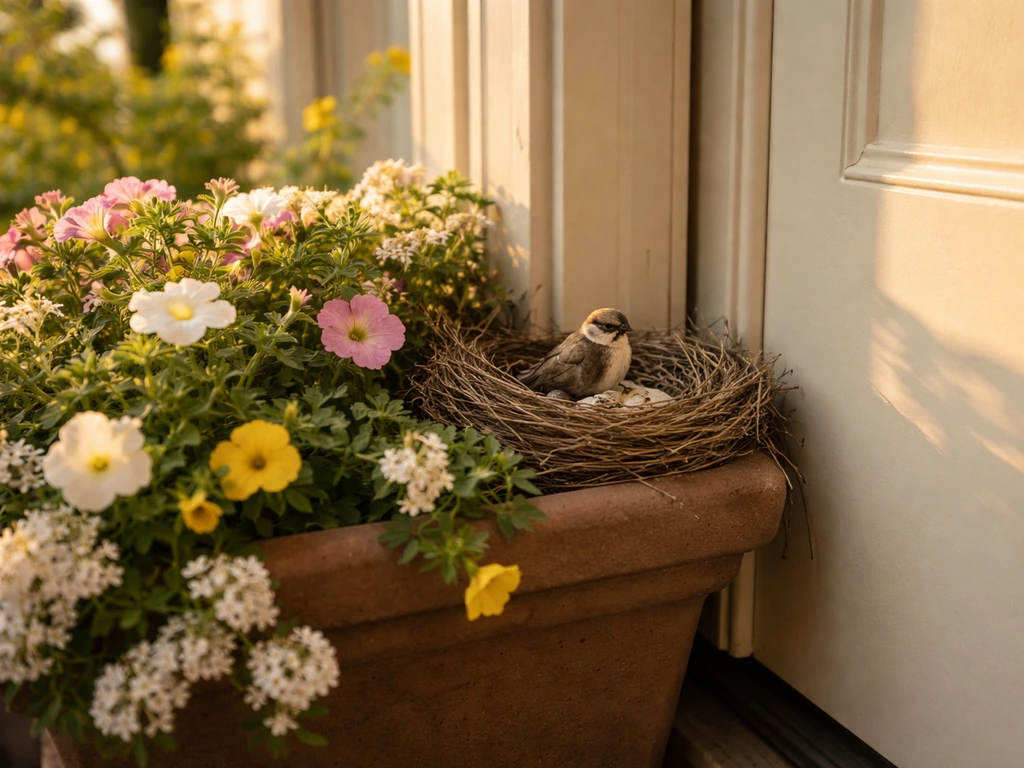
This is where the encounter gets interesting for a lot of people. Spotting a bird settled on its nest, especially near your home or at a moment that feels significant, tends to carry weight beyond the biological. Across many traditions, a bird on a nest is seen as a symbol of protection, nurturing, patience, and the quiet courage it takes to bring something new into the world. The bird isn't doing anything dramatic. It's simply staying, holding, waiting. That stillness is itself the message for many who feel drawn to this kind of symbolism.
Metaphysically, some interpret the sight as a reminder to tend to what you're building, whether that's a relationship, a creative project, a home, or a personal transformation. The bird commits fully to something that isn't yet visible to the outside world. If you're in a waiting period in your own life, that image can land with surprising resonance.
In many spiritual frameworks, birds are also seen as messengers or connectors between the earthly and the divine. A bird choosing to nest near your space is sometimes read as a sign that your home carries protective or nurturing energy. Some traditions associate nesting birds with fertility, new beginnings, or an incoming blessing. None of these interpretations need to be taken as certainty. They work best as personal reflection prompts rather than prophecies.
If you encountered this scenario in a dream rather than outdoors, the symbolic weight tends to be amplified. Dreaming of a bird on a nest often points to themes of creative incubation, hidden potential, or the need for patience before something in your life is ready to emerge.
Biblical, folklore, and cultural layers
blank" rel="noopener noreferrer">Deuteronomy 22:6–7 is one of the most direct biblical references to a bird on a nest. The passage instructs that if you come across a bird's nest with eggs or young and the mother is sitting on them, you must not take the mother along with the young.
A Reddit discussion in r/Bible specifically centers Deuteronomy 22:6, 7 on how readers understand the scenario of the mother bird sitting on eggs and what ethical restraint the passage implies the mother is sitting on them. This commandment, often called '[shiluach ha-ken' in Jewish tradition (the sending away of the mother bird)](https://www.
chabad. org/parshah/article_cdo/aid/3046831/jewish/Sending-Away-the-Mother-Bird. htm), is interpreted as an act of mercy: you may take what you need, but you must spare the mother's suffering at witnessing the loss. The image of a mother bird steadfastly sitting on her nest is embedded in a framework of compassion and ethical restraint.
In rabbinic tradition, this command is understood as shiluach haken, the obligation to send away the mother bird before taking the eggs or young.
Psalm 84:3 paints a gentler picture: birds nesting near the altar of God, close to the divine presence. This verse has inspired centuries of interpretation linking nesting birds to themes of divine providence, shelter, and the idea that even small creatures find refuge in sacred spaces. The nesting bird, in this reading, is a symbol of peace and belonging.
In Celtic and broader European folklore, birds nesting on or near a home were generally seen as a good omen, a sign of domestic harmony, good fortune, and the blessings of the natural world extending into human life. Some traditions held that disturbing a nesting bird would bring bad luck to the household, which neatly aligns with the modern ethical advice not to interfere. Indigenous traditions across many cultures similarly treat nesting birds as worthy of respect and careful observation, seeing them as indicators of seasonal rhythms and natural balance rather than casual omens.
Eastern traditions, particularly in Chinese culture, associate birds nesting near the home with incoming prosperity and family harmony. The nest itself is a symbol of home, rootedness, and the continuation of lineage. Whether you approach this from a biblical, folkloric, or Eastern lens, the through-line is consistent: a bird on a nest near your space is generally considered a positive, protective sign.
What to actually do when you find a bird on a nest

The most important practical rule is also the one that most aligns with the spiritual interpretations: don't disturb it. Repeated visits, loud noises, bright lights, or getting too close can stress the incubating bird enough to cause nest abandonment. That's not a metaphorical risk. It's a real one that can cost those eggs or chicks their survival. So if you've found a nest and you feel the pull to observe, do it from a respectful distance, briefly, and then step back.
- Observe from a distance. Use binoculars if you have them. Avoid approaching close enough to flush the bird off the nest.
- Don't touch the nest, eggs, or chicks. Handling can cause abandonment and may be illegal depending on your location and the species involved.
- Minimize how often you check. Every visit carries some disturbance risk. A quick check every few days is far better than daily monitoring.
- Keep the area calm. Avoid loud music, power tools, or other disturbances near the nest during the active period.
- If the nest is in a genuinely dangerous or inconvenient spot (like a doorway you must use), leave it alone until the young have fledged, then consult your local Audubon chapter or state wildlife authority if you need guidance on what comes next.
- If you find a hatchling or nestling on the ground and the parents don't return within about two hours, contact a licensed wildlife rehabilitator. Don't attempt to care for it yourself.
- If a bird appears injured near the nest, place it gently in a protected spot outdoors and contact a wildlife rehabber if it doesn't fly off on its own.
Active nest, abandoned nest, eggs vs fledglings: the context that changes everything
One of the most common points of confusion around this topic is whether what you're seeing actually signals an active nest or one that's past its point of use. This matters both practically and symbolically, because the 'meaning' of a bird on a nest differs depending on what stage you're observing.
| What you observe | What it likely means | How to interpret it symbolically |
|---|---|---|
| Bird sitting still on nest, barely moving | Active incubation: eggs are present and being kept warm | A sign of patient devotion; new life being carefully tended in secret |
| Bird on nest, frequently leaving and returning | Brooding chicks or nearing hatch; also normal brief foraging absences during incubation | A reminder that nurturing requires both presence and movement; balance of care and freedom |
| Bird leaves and doesn't return for hours | Possible abandonment OR normal post-fledge departure; check if nest looks empty or if chicks are nearby on the ground | If truly abandoned, reflects the natural completion of a cycle; a chapter closing |
| Nest appears empty, no bird present | Fledglings may have left successfully, or the nest was predated or abandoned | Completion and release; what was nurtured has moved forward |
| Young bird on the ground near nest, cannot fly | Normal fledgling behavior in many species; parents likely nearby and still feeding it | A transition moment; not every creature ready to move forward looks ready from the outside |
One thing that trips people up is the fledgling stage. Many young birds leave the nest before they can fully fly, and they look helpless and abandoned even when they're not. If you see a small bird near a nest site that can hop and has most of its feathers but can't fly, the parents are almost certainly nearby and actively feeding it. This is not a crisis, and it's not an abandoned bird in the way most people imagine. Stepping back is almost always the right call.
Similarly, if you're trying to decide whether to interpret a sighting as spiritually meaningful, context shapes that too. A bird sitting motionless on a nest directly in your path after a significant life event feels different from spotting a bird nesting somewhere unremarkable on a routine walk. Trust your instincts about whether the encounter feels like it's speaking to you, and approach whatever meaning you draw from it with the same gentleness the bird itself deserves.
If this encounter happened near your front door, on a wreath, or somewhere close to your home's entrance, the symbolic weight in many traditions is even stronger since the threshold of a home carries its own spiritual significance. For many people, a bird nest in front of house meaning is tied to protection at the entrance and a reminder to be patient while life settles into place. If you found a bird nesting right by your front door, the meaning can shift from general symbolism to a home-and-protection message. Those specific scenarios tend to attract their own layers of meaning that are worth exploring separately.
What stays consistent across every tradition and every practical guideline is the same core message: a bird on a nest deserves patience, respect, and space. Whether you're there to observe, to find meaning, or simply to figure out what to do next, that's always the right place to start. What does this particular moment of stillness ask of you? If a bird is building or nesting in your house, the meaning often comes down to the message people attach to protection, patience, and new beginnings bird building nest in my house meaning.
FAQ
How can I tell if the bird is incubating eggs versus brooding chicks?
Look for clues under the parent: if you can see eggs (or the nest looks empty) and the bird repeatedly settles tightly for long stretches, it is usually incubating. If there are visible, feathered or downy chicks and the parent is covering them in a low, protective posture, it is usually brooding. In both cases, brief departures to forage are normal, but brooding often involves more frequent covering after the parent returns.
If the parent bird flies off when I approach, does that mean the nest is abandoned?
Not necessarily. Many birds leave temporarily to feed or reduce risk, and they often return when the area is quiet. A better test is whether the parent returns within a reasonable time window after you step back. If you repeatedly disturb the site, that increases the odds of abandonment, so the safest move is to increase distance and minimize visits.
Are there situations where I should call wildlife authorities instead of just stepping back?
Yes. If a nest is in immediate danger (for example, a scheduled landscaping activity, a blocked access point, pets constantly harassing the area, or the nest appears injured or flooded), contact a local wildlife rehabilitator or animal control. They can suggest exclusion measures that protect both the nest and your property without forcing the birds to abandon.
What if I think the bird is on an “old” nest but it looks active?
Nests can appear reusable or bulky even when they are not. Some birds build over prior structures, and others reuse parts of a site. If there is ongoing parent behavior (settling on the nest, carrying food nearby, protective responses), treat it as active regardless of age. If no parent activity is observed over time, the nest may be inactive, but confirm before taking any action.
Is it okay to move the nest if it is on a wreath, porch, or near a doorway?
In most cases, it is a bad idea. Moving the nest can cause cooling, exposure, and abandonment, and it can also violate local wildlife protection rules. Instead, adjust your behavior (reduce traffic, keep pets away, avoid loud activity near the entrance) and keep people from repeatedly checking the spot.
How far should I stay away to reduce stress on the nesting bird?
Aim for “quiet and out of sight” rather than a specific number. If the bird changes behavior noticeably when you are present (leaves the eggs or chicks quickly, calls persistently, or returns to the nest reluctantly), you are too close. A practical approach is to observe from indoors or behind a window, and only approach if you can do so without drawing the parent’s attention.
What should I do if a fledgling is sitting near the nest and looks helpless?
Treat it as a normal fledgling stage when the bird is hopping or fluttering but not fully flying yet. Parents are typically nearby and actively feeding. Do not pick it up or move it unless there is a clear danger (for example, it is in traffic or cannot get away from immediate threats). If it is in danger, place it back at the general area where it was found only if local guidance allows it, otherwise contact a wildlife professional.
Can I photograph or record the nest with a camera or drone?
Photography is usually fine when it does not disturb the parent, but drones are often not. For cameras, use zoom from a distance, avoid sudden movement, and stop if the bird shows stress or frequent nest leaving. Drones and close-range video tend to trigger alarm responses and can be unsafe for the birds and the nest.
Does “the bird is on the nest” always have a spiritual meaning?
No, it can be purely literal most of the time. Even when people attach symbolism like patience or protection, the most grounded interpretation starts with context: breeding stage, location, and whether you are witnessing active care. If you are seeking meaning, you can still treat the moment as reflective without assuming it is a prediction or guaranteed sign.
If a bird nests near my front door, does the meaning change in a practical way?
Practically, it changes how you should manage your household traffic. A threshold location increases the chance people and pets disturb the area, so the key action is to create a calmer buffer zone (keep pets indoors, reduce door slamming, and avoid blocking the entrance to the nesting spot). Symbolically, many traditions interpret it as protection or patience, but the bird’s survival still depends on reducing interference.
Next Article
Bird Building Nest in My House Meaning and What to Do
Meaning of a bird nesting at home plus practical steps to handle it humanely and safely, with symbolic options.