Stepping on a dead bird is one of those moments that stops you cold. Whether it happened in your backyard, on a morning walk, or right outside your front door, there's usually a split-second of shock followed by two very different questions: "Am I okay?" and "What does meaning of dead bird on driveway?" Both questions are worth taking seriously. This guide works through the practical steps first, because your health matters most, and then moves into the rich spiritual, cultural, and religious interpretations that so many people find meaningful after an encounter like this. what does a dead bird mean This guide works through the practical steps first, because your health matters most, and then moves into the rich spiritual, cultural, and religious interpretations that so many people find meaningful after an encounter like this. <a data-article-id="5D841C99-2699-45D7-9A7E-85E69C32C274">finding a dead bird meaning</a>. dream meaning dead bird. finding a dead bird outside your house meaning
Stepping on a Dead Bird Meaning: Safe Steps and Interpretations

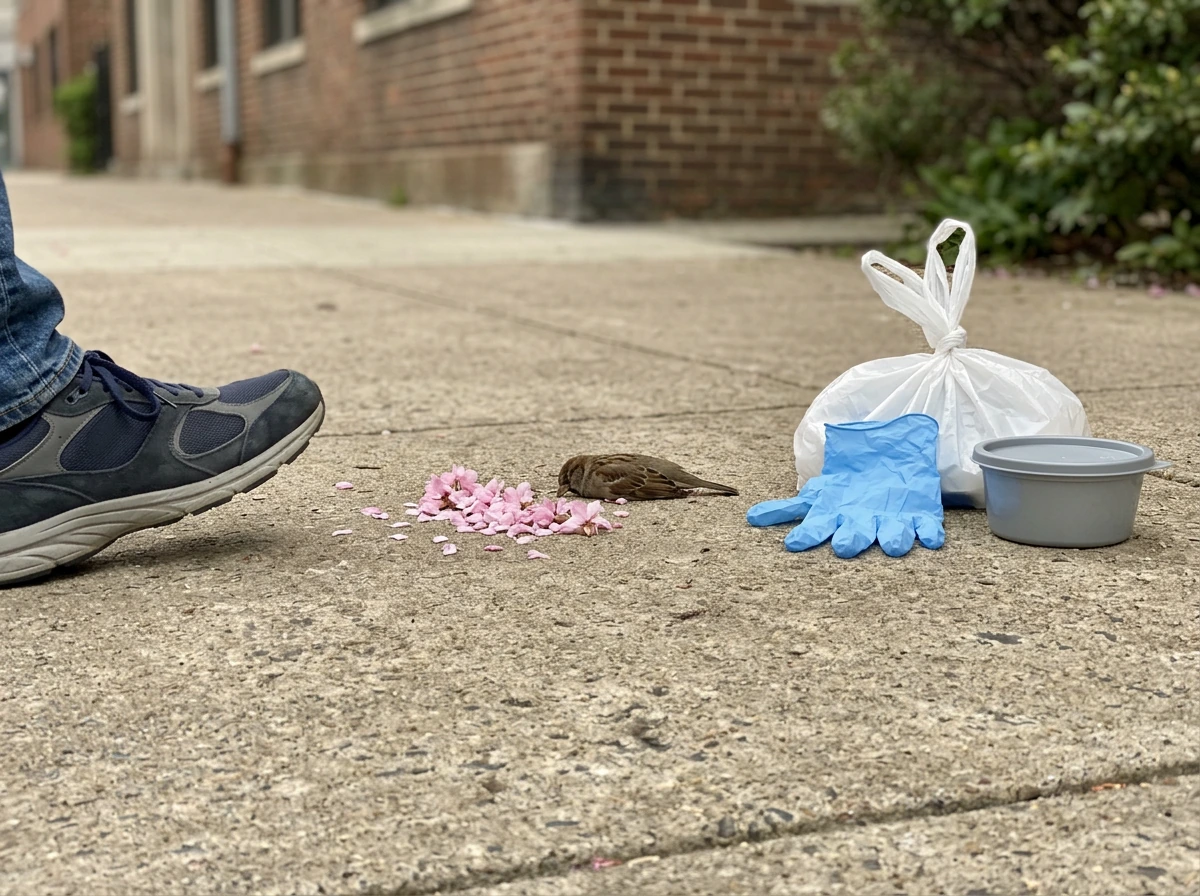
First Things First: What to Do Right After It Happens
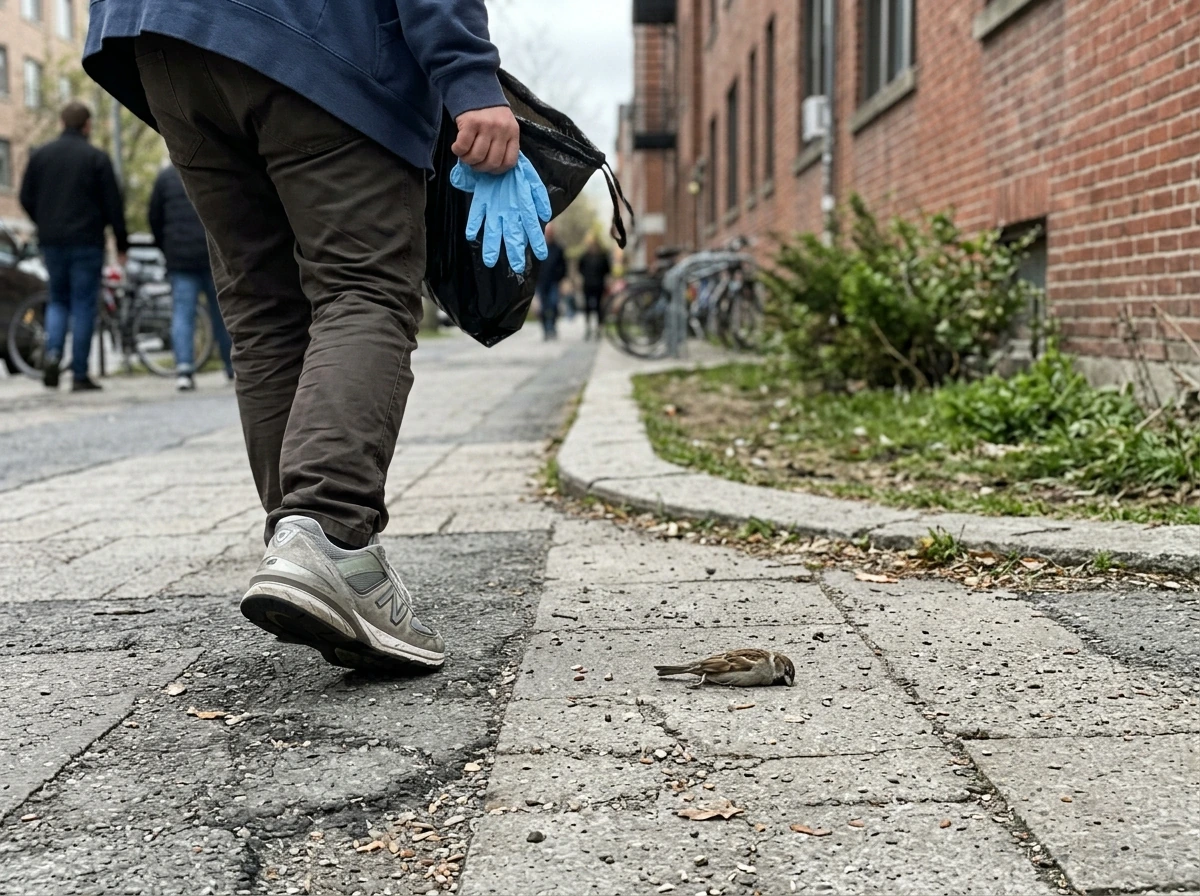
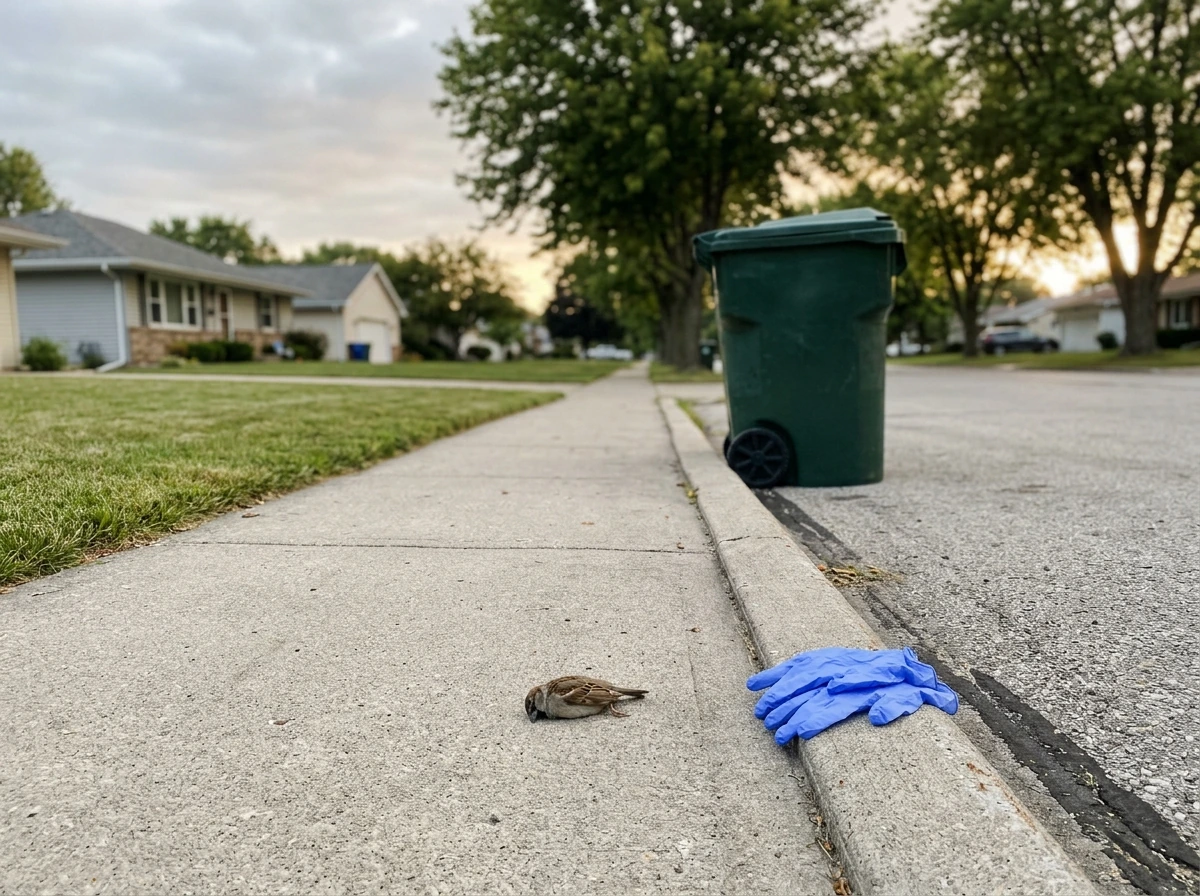
The very first thing to do is step back and resist the urge to pick up the bird with your bare hands. The CDC and USGS both advise avoiding bare-handed contact with any dead bird, because dead wild birds can carry avian influenza, West Nile virus, and other pathogens. The risk to a healthy adult who briefly steps on a dead bird is generally low, but it's real enough to take seriously, especially if you have open cuts on your feet or the bird is visibly decomposed.
Here is the practical sequence to follow once you've stepped back:
- Don't touch the bird with bare hands. If you need to move it, use disposable gloves or invert a plastic bag over your hand to pick it up without direct contact.
- Clean your shoes immediately. Remove visible debris with a paper towel or disposable cloth, then wash the soles thoroughly with soap and water. Follow up with an EPA-registered disinfectant that lists influenza A viruses on its label. Benzalkonium chloride-based products are a solid choice, and the Illinois Department of Public Health specifically references them for shoe disinfection.
- Wash your hands. Use soap and water right after, even if you didn't touch the bird directly. If soap and water aren't available, use an alcohol-based hand sanitizer as a temporary measure until you can wash properly.
- Clean any surface that was contaminated. If the bird was on a patio, step, or driveway, clean the area with soap and water first to remove visible dirt, then apply an EPA-approved disinfectant according to the label instructions.
- Do not use a pressure washer. The CDC specifically warns against pressurized water because it can aerosolize pathogen particles and actually increase your exposure risk.
- Dispose of the bird properly. Double-bag it in sealed plastic bags. Check your local guidelines, because many states and counties have specific rules, and USDA APHIS recommends contacting your state wildlife agency or state health department if you find dead wild birds, especially in larger numbers.
- If you feel unwell afterward. The CDC advises that anyone who develops flu-like symptoms after handling a sick or dead bird should seek medical attention promptly and mention the bird contact to their doctor.
One thing worth noting: if the bird appears to have been dead for a while and there is a significant accumulation of droppings nearby, be especially cautious about disturbing the area. The CDC and NIOSH both flag histoplasmosis, a fungal lung infection, as a risk when bird droppings are disturbed and spores become airborne. For large accumulations, professional hazardous-waste cleanup is the recommended route.
The Spiritual Side: Common Omens and Messages People See in This
Once the practical side is handled, many people find themselves sitting with something harder to name. Stepping on a dead bird, especially accidentally, tends to feel charged in a way that a routine encounter doesn't. That feeling has history behind it. white dead bird dream meaning
In spiritual and psychic-leaning traditions, accidentally stepping on a dead bird is often read as an unexpected message breaking through into your conscious awareness. The idea is that because you didn't see it coming, the encounter bypasses your mental filters, making it a more direct signal than something you consciously noticed. Common interpretations in these frameworks include:
- A warning or spiritual nudge to pay attention to something you've been ignoring, particularly in the area of personal freedom, communication, or a relationship that feels stagnant.
- A sign that a cycle in your life is ending, and that resistance to that ending is part of what the encounter is pointing toward.
- Spiritual 'pushback,' sometimes described as the universe or your guides signaling that a current path isn't aligned with your growth.
- A prompt to release grief or an old identity that no longer serves you, especially if the encounter feels emotionally heavier than the event itself would seem to warrant.
Some spiritual writers also factor in the species of the bird. A crow or raven underfoot carries different connotations than a sparrow or a dove. A sparrow, for example, is traditionally associated with community and simplicity, while a crow is linked in many traditions to transition, intelligence, and messages from the unseen. If you can identify the species, it's worth sitting with what that bird symbolizes for you personally. You might find useful context in related explorations of what dead birds mean more broadly, since species and color both tend to shift the interpretation.
What Folklore and Cultural Traditions Say About Dead Birds Underfoot
Birds have been used as omens across virtually every human culture on record. The ancient Greeks and Romans practiced ornithomancy, a formal system of reading bird behavior and encounters for divine guidance. The direction a bird flew, the sounds it made, and even its death were all considered meaningful data about what lay ahead. This wasn't superstition in the dismissive modern sense; it was a structured interpretive framework that shaped real decisions, including military ones.
In British and broader European folklore, black birds such as ravens and crows have long been associated with death and approaching change. Wikipedia's documentation of British superstitions notes that black birds were historically read as signals of death or misfortune, and an ethnographic record from the Basque region describes people attempting to avert such omens through ritual actions like throwing salt into a fire. The point isn't that these practices are literally true; it's that the emotional weight people bring to bird encounters, especially dead ones, is ancient and widespread.
In some Indigenous North American traditions, birds are understood as messengers between the human world and the spirit world, and encountering a dead bird, particularly underfoot, can signal that a message has arrived or that a crossing between worlds is near. Celtic traditions similarly treat birds as liminal creatures, beings that exist between earth and sky and therefore between the visible and invisible worlds. Stepping on one, in this framing, is a threshold moment: something is crossing over, and you've been asked to witness it.
Across these traditions, the common thread isn't doom. It's transition. Dead birds in folklore overwhelmingly signal endings that make room for beginnings, losses that precede transformation, and thresholds being crossed rather than calamities arriving. That's worth holding onto.
A Biblical and Christian Perspective on Dead Birds
For readers who approach life through a Christian or biblical lens, it's helpful to know upfront that Scripture doesn't offer a direct teaching on stepping on a dead bird as an omen or sign. What the Bible does offer is a rich framework for understanding birds as creatures held in God's care and attention. Matthew 6:26 is probably the most cited: 'Look at the birds of the air; they do not sow or reap or store away in barns, and yet your heavenly Father feeds them. Are you not much more valuable than they?' The verse, also paralleled in Luke, is consistently used in Christian teaching to redirect anxiety toward trust in God's provision.
Psalm 84 uses imagery of sparrows finding a home at God's altars, a passage that Christian writers have long drawn on to illustrate that even small, seemingly insignificant creatures are held in divine awareness. Genesis 1:30 places birds among the creatures given the breath of life, grounding them in God's original creation. Taken together, these texts suggest a Christian framework in which birds carry theological weight as symbols of God's attentiveness, without necessarily being treated as prophetic signs.
In popular Christian symbolism writing, dead birds are sometimes contrasted with living ones: a living bird might symbolize spiritual freedom, cleansing, or new life, while a dead bird points toward mortality, the consequences of sin, or the need for renewal. Some Christian writers and bloggers treat an unexpected dead bird encounter as a prompt to reflect on what in your own life may need to be surrendered or released to God, not as a prophecy, but as a metaphor that the Holy Spirit might use to invite attention. That's a softer, more devotional reading, and it resonates with how many Christians approach signs generally: less as divine telegrams and more as invitations to prayer and reflection.
If you're coming from a Christian background and felt unsettled by the encounter, a practical response might be to bring it to prayer rather than to treat it as a warning. Ask what you might need to release or surrender, and let the imagery work as a meditation rather than a message with a fixed meaning.
The Metaphysical View: Energy Shifts, Transformation, and What the Bird Might Represent
In metaphysical frameworks, everything is understood as carrying energetic information, and an unexpected physical encounter with death, even a bird's death, is treated as a moment when that information becomes unusually accessible. The core metaphysical interpretation of stepping on a dead bird tends to cluster around several overlapping ideas.
- Transformation: Death in metaphysical symbolism is rarely about literal endings. It more often signals the completion of one phase and the beginning of another. The bird underfoot is a marker that something is completing.
- Energy shift: Some practitioners describe this kind of encounter as an energetic reset point, a moment when the field around you is in flux and you're being invited to notice what needs to change.
- Grief and release: If you've been carrying unprocessed grief, loss, or attachment to something that has already ended, a dead bird encounter is sometimes read as a mirror for that. The question becomes: what are you still holding that is ready to be released?
- A message connected to the bird's species or color: A white bird, for instance, is often associated with peace, purity, and spiritual transition. A dark bird might carry themes of shadow work or confronting what you'd rather not look at. The color and species add texture to the base interpretation.
- Loss of spiritual connection: Some metaphysical writers describe dead bird sightings as signals that you may have drifted from your intuitive or spiritual center, and that the encounter is a prompt to return.
What's interesting about the metaphysical reading is that it tends to put the reader at the center of the interpretation rather than offering a fixed meaning. The bird isn't delivering a verdict; it's holding up a mirror. That's actually a more useful frame than a single definitive answer, because it invites you to bring your own life circumstances into the reading.
How to Make the Meaning Personal: Questions, Journaling, and Simple Rituals
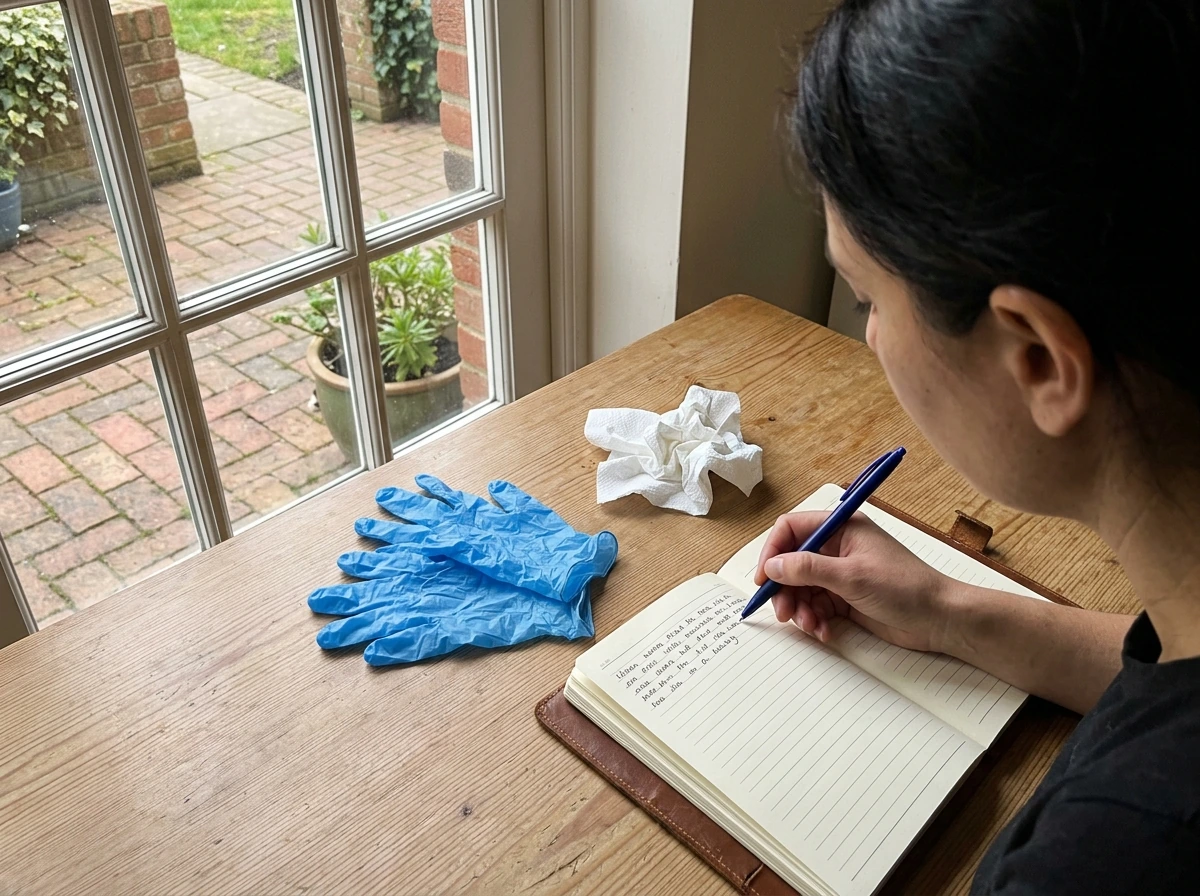
The most honest thing I can tell you is this: no single interpretation is universally true. What this encounter means for you depends on what's happening in your life right now, how the moment felt, and what resonates when you sit quietly with it. Here are some questions worth sitting with:
- What was on my mind just before I stepped on the bird? Was I thinking about a decision, a relationship, or a problem?
- How did my body respond in the moment? Fear, sadness, disgust, or something more neutral?
- Is there something in my life right now that feels like it's ending or needs to end?
- Have I noticed other bird-related encounters recently? Patterns across multiple bird signs often carry more weight than a single incident.
- What does the species of this bird, if I know it, traditionally represent in the traditions I resonate with?
- Am I in a period of grief, transition, or change already? If so, the encounter may simply be reflecting that back to you.
For journaling, try writing for ten minutes without editing or censoring. Start with the sensory details: where you were, what the bird looked like, what you felt. Then let your pen move into what the encounter stirs up. Often the meaning surfaces not through analysis but through the act of writing itself.
If you feel drawn to a gentle ritual, options that align across multiple spiritual traditions include: lighting a candle and sitting quietly to acknowledge the bird's passing, saying a brief prayer or intention of gratitude for the message (however you understand it), going outside and spending a few minutes in nature to ground yourself, or writing down one thing you're ready to release and burning or burying the paper. None of these require a specific religious framework. They're simply ways of giving the experience a container so it doesn't just rattle around unexamined.
When to Call in Experts, and How to Prevent Future Encounters
Sometimes the situation calls for more than a cleanup and a reflection session. Here's when you should reach out to the right people:
- Multiple dead birds in one area: USDA APHIS and most state wildlife agencies ask that you report large-scale die-offs rather than handling them yourself. Contact your state wildlife agency or state health department.
- You develop symptoms: If you experience flu-like symptoms, fever, or respiratory issues within days of the encounter, tell your doctor about the bird contact. The CDC says to seek medical attention promptly in this situation.
- Large accumulations of droppings are present: Don't disturb them yourself. The CDC and NIOSH both recommend professional hazardous-waste cleanup to avoid stirring up histoplasmosis-causing fungal spores.
- You're unsure about local disposal rules: Check with your local health department or municipal authority. Some localities require dead animal disposal within a specific timeframe, and regulations vary widely by state.
- The bird was on or near a water source: Dead birds near water can be part of West Nile virus surveillance programs. Check your local or state health department's reporting protocols.
For prevention going forward, the best habits are fairly simple. Wear shoes with closed toes in areas where birds roost or nest. Keep outdoor areas clean of bird droppings, which tend to attract more birds and create accumulation risks. Keep pets away from dead wildlife. If you find a dead bird and need to dispose of it, always use gloves or an inverted plastic bag, double-seal it, and wash your hands immediately after. These habits don't require a major lifestyle change; they just make the practical side of future encounters easier to manage.
And finally, it's worth remembering that birds die naturally every day from cold, predators, window strikes, and age. Sometimes stepping on a dead bird is exactly what it looks like: an unlucky step and a natural death. That doesn't invalidate a spiritual reading if one resonates for you. The two can coexist. The bird was already gone before you arrived; what you do with the encounter, practically and symbolically, is entirely yours to decide. If you also want to explore context beyond stepping on one, you can compare this with finding a dead bird meaning in dreams.
FAQ
What should I do immediately if I stepped on the bird and my shoes got splattered?
Keep your distance from the area, avoid wiping anything on your clothing, and remove your shoes if possible. If droplets or debris are on soles, put them directly into a trash bag (or wipe them down carefully using disposable paper) and wash the outside of the shoes with disinfectant-soap. If you got any material on skin, rinse with running water and soap right away, then check for any open cuts before you continue walking.
Is it safe to pick up the bird if I only touched it briefly with a glove?
Gloves reduce risk, but you should still avoid pressing the bird or shaking it. Use an inverted plastic bag or scoop-and-bin method so you do not generate dust or splatter. After disposal, remove gloves carefully without touching the outside, double-seal the waste, and wash hands even if you wore gloves the whole time.
What if the dead bird is on grass or gravel, not a driveway, and I walked through the area?
The concern is less about the surface and more about droppings and disturbed material. If you stepped through the spot, consider removing footwear before entering, then clean soles and any visible debris. If the area has heavy droppings, avoid lingering, and if you have asthma or sensitivities, consider wearing a mask while cleaning and keep indoor airflow controlled.
Do I need a doctor visit after stepping on a dead bird?
Usually, no, if you are otherwise healthy and only had brief contact with a clean shoe sole. Seek medical advice sooner if you have cuts that were exposed, if you inhaled dust from droppings, or if you develop symptoms such as persistent fever, unusual respiratory issues, or worsening eye irritation over the next days.
How can I tell whether bird droppings are likely to be a higher-risk situation?
Look for dense spotting, dried clumps, and visible accumulation around perches or where birds congregate. If droppings are thick enough that you can see an area pattern, and especially if they are being swept or disturbed, treat it as higher risk and avoid dry sweeping. Use damp methods and disposable materials, or hire a cleanup service for large areas.
What should I do with pets that sniffed or licked the area?
Prevent further contact, wipe your pet’s paws with pet-safe wipes, and watch for symptoms like coughing, lethargy, or vomiting. If your pet actually contacted or ate any portion of the bird or contaminated material, call your veterinarian for specific guidance, especially if you see respiratory signs.
Does the meaning change if the bird hit a window versus it was already dead?
Practically, a window strike often creates more risk of small splatter and debris, so avoid sweeping or vacuuming without protection, and ventilate if you must clean. Symbolically, some people distinguish these because a strike can feel sudden and “intentional,” while an already-dead bird reads more like an ordinary encounter, so your interpretation may shift toward your personal sense of timing and surprise.
If I did not see the bird and only realized after, should I interpret it differently spiritually?
Many traditions treat “awareness” as part of the meaning, so realizing afterward can feel less like an explicit message and more like a prompt that came into focus when you noticed. A practical way to use this is to reflect on what changed in your body and mind at the moment of noticing, then separate that feeling from guilt or fear.
Are there common mistakes that increase risk during cleanup?
Avoid dry sweeping, vacuuming without proper filtration, or grabbing the bird with bare hands. Don’t hose down the area in a way that splashes droppings broadly, and don’t burn materials that may contain contaminated residue. Also, don’t reuse the same gloves for other tasks, like touching door handles or pet bowls.
What if I feel scared or anxious after the encounter, even if I cleaned up?
First, reassure yourself with a simple closure routine: dispose of waste, wash hands, and remove shoes or clothing from the immediate living area. Then if you still feel keyed up, try a grounded reset like stepping outside for a few minutes and doing slow breathing for several cycles. This helps separate real-world cleanup from lingering fear, regardless of whether you take a spiritual meaning.