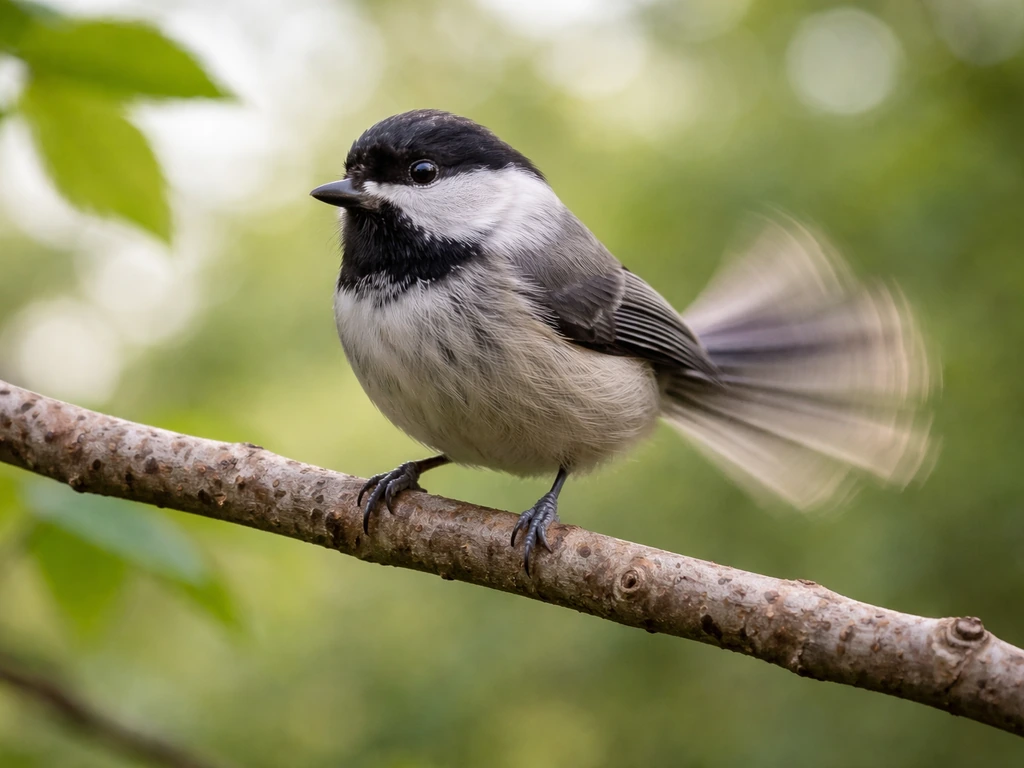
When a bird ruffles its feathers, it is almost always doing something completely ordinary: adjusting its temperature, shaking off dust, resetting its plumage after preening, or signaling mild agitation. Most of the time there is nothing alarming happening. But because birds communicate almost entirely through posture and movement, that ruffled look carries real information once you know how to read it. If you are wondering what it means when a bird ruffles its feathers, context is the key. And if you are drawn to ask what it means on a deeper level, that instinct is worth following too.
Bird Ruffling Feathers Meaning: Spiritual and Practical Guide

Maya Hartwell
28 May 2026
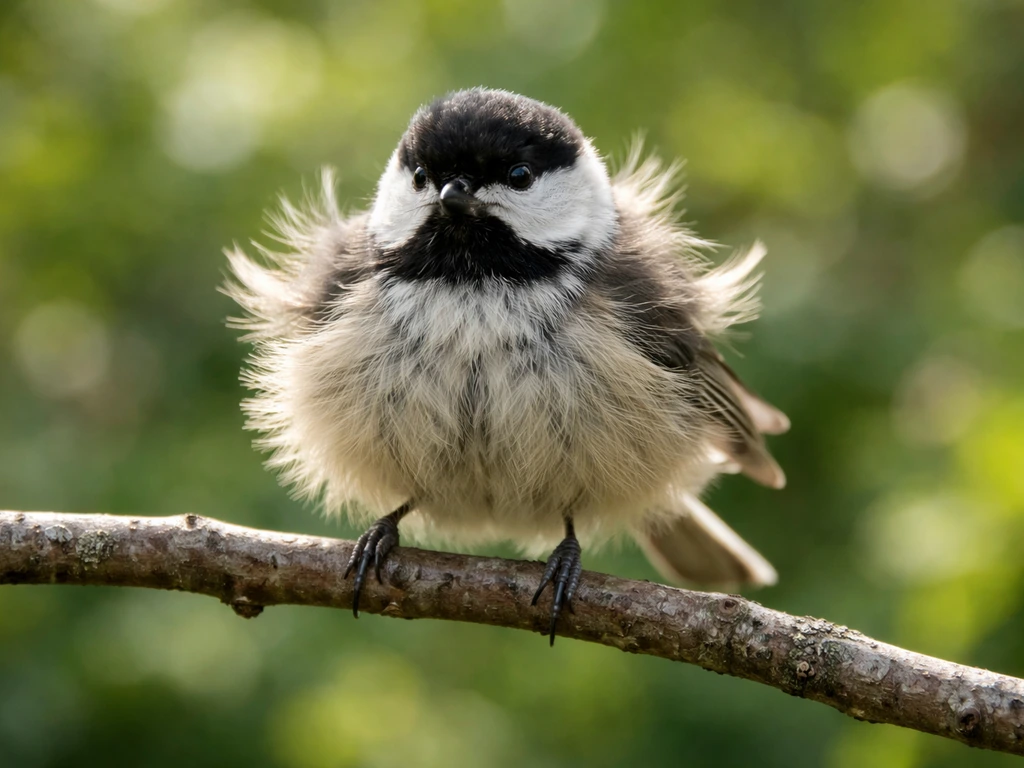
What feather ruffling actually looks like
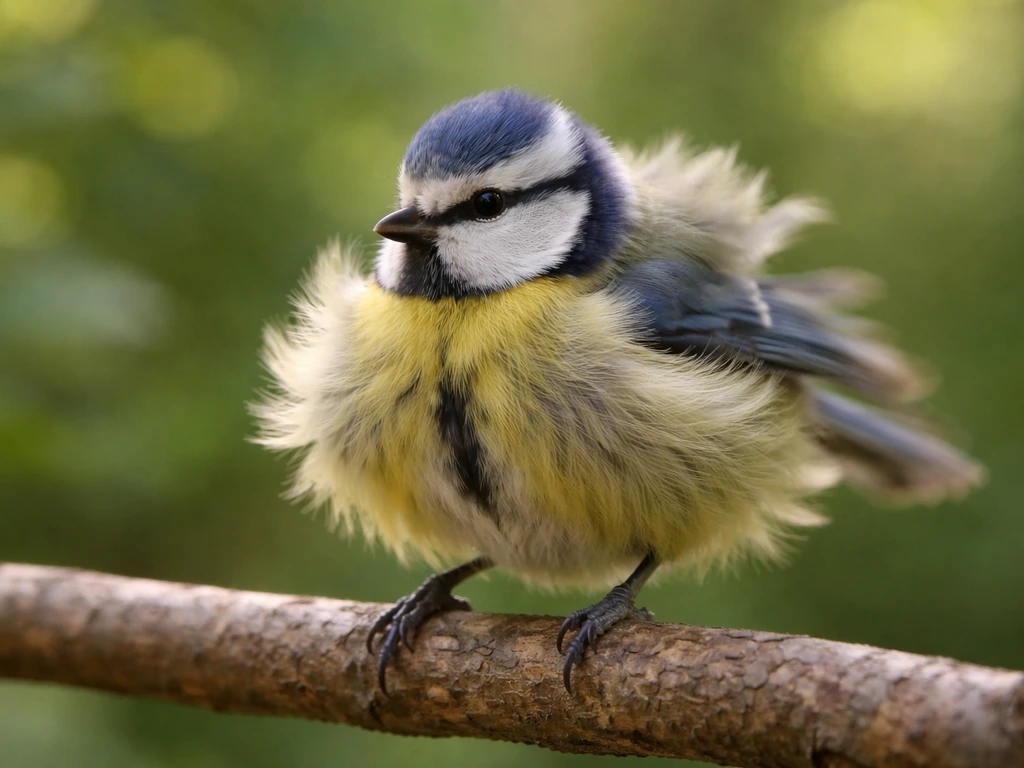
Feather ruffling is a quick, rippling motion where a bird loosens and then resettles its feathers all at once. It usually lasts about one second and you can see the whole body briefly expand before snapping back to its normal silhouette. This is different from prolonged fluffing, where a bird holds its feathers raised and looks noticeably rounder or puffier than usual for an extended period. Ruffling is a reset motion. Fluffing is a sustained posture. Both are worth understanding, but they mean slightly different things.
Birds ruffle to realign hundreds of tiny feather shafts that have shifted during movement. Think of it like shaking wrinkles out of a shirt. It also redistributes the air pockets trapped between feathers, which is how birds insulate themselves. You will see a quick ruffle after a bird lands, after preening, after a threat passes, or when it transitions from active movement to resting. If you are wondering what it means when a bird lights on you or nearby, the same cues about posture and context can help you interpret the message lands. It is a normal, frequent behavior in healthy birds of almost every species.
The everyday reasons birds ruffle their feathers
Temperature regulation
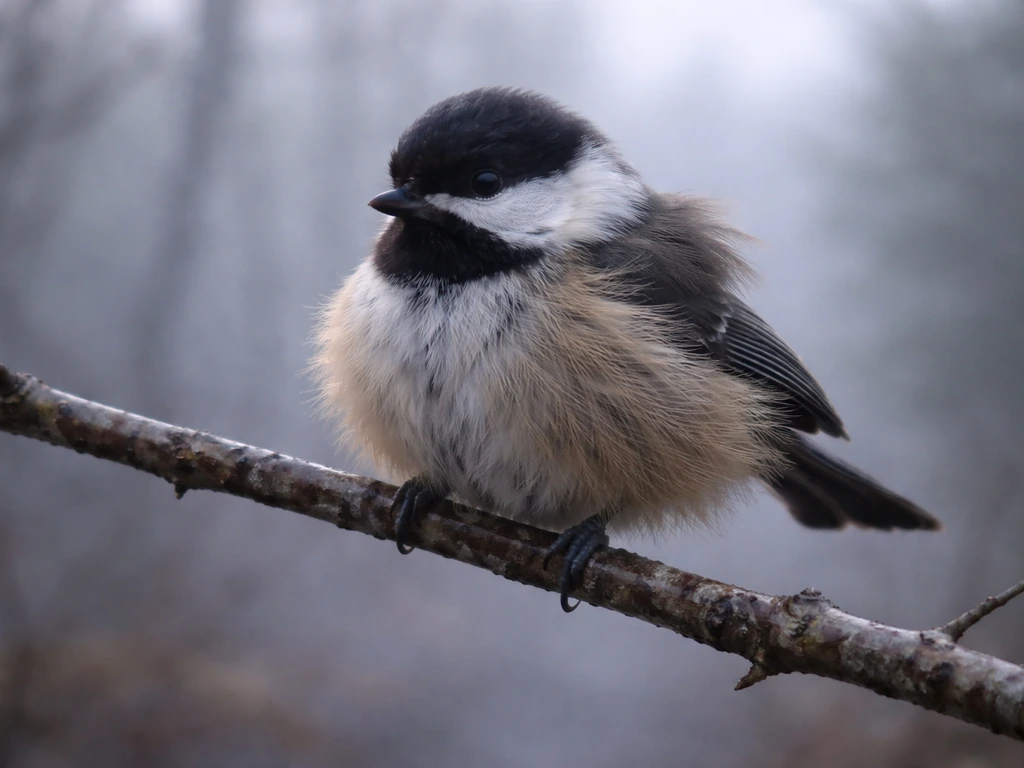
Birds do not sweat. Their primary tool for managing body heat is their feathers, and ruffling is how they adjust that insulation in real time. On a cold morning you might see a bird sitting with feathers slightly raised for extended periods, trapping warm air close to its body. When it needs to cool down quickly, it ruffles to release that air. A bird ruffling repeatedly near a heat source, or in shifting weather, is almost certainly just thermoregulating.
Preening and grooming
After a bird preens, it almost always does a full-body ruffle to settle everything back into place. This is completely healthy. In fact, regular preening and the ruffles that follow it are signs of a bird in good condition. A bird that is not preening at all is usually the worrying sign, not one that preens and shakes itself out frequently.
Stress, agitation, and mild fear
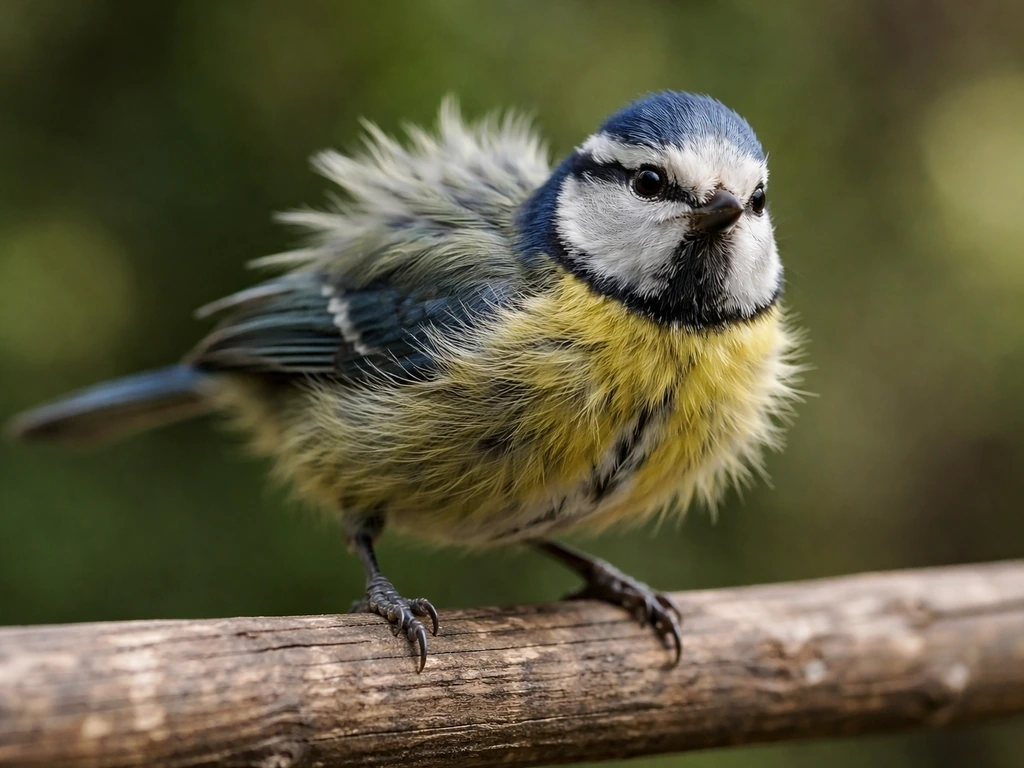
A quick, sharp ruffle paired with a sudden alert posture (head up, eyes wide, body elongated) usually means the bird has noticed something it does not like. This could be a predator, another bird nearby, a sudden noise, or even you getting too close. After the perceived threat moves on, the bird will often do another ruffle as a kind of reset before returning to normal activity. This is a healthy fear response, not a sign that anything is wrong.
Attention and communication
Some birds, particularly parrots and corvids, use ruffling as a social signal. A parrot ruffling its head feathers toward you is often inviting a scratch. A raven ruffling its throat feathers can be signaling dominance or performing a display. When paired with vocalizations, ruffled feathers become part of a broader conversation the bird is having, either with you or with its environment.
When ruffling crosses into something you should watch closely
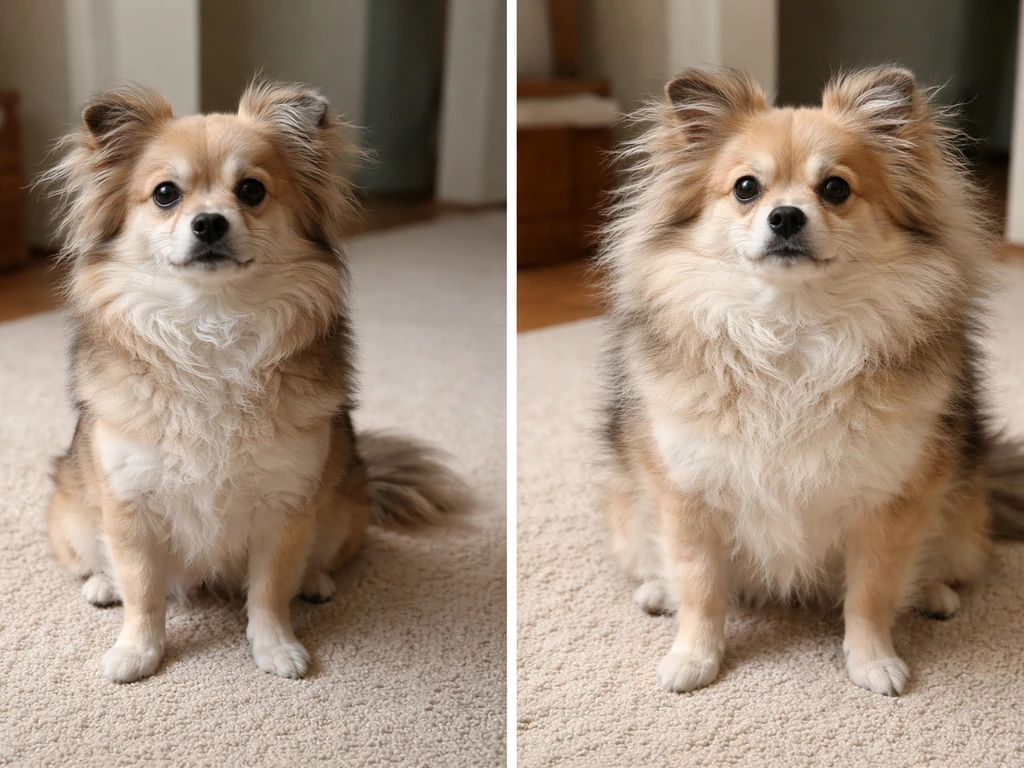
This is probably the most important practical distinction in this whole article: brief ruffling is normal, but prolonged fluffing paired with other signs is a red flag. According to the Merck Veterinary Manual and the American Association of Avian Veterinarians, fluffed-up feathers held continuously are among the earliest visible signs of illness in birds, especially when combined with any of the following.
- Tail bobbing synchronized with each breath (a sign of respiratory distress)
- Open-mouth breathing or wheezing
- Eyes closed or partially closed during the day
- Sleeping far more than usual
- Labored breathing, audible clicking, or any abnormal respiratory sounds
- Fluffed posture that does not change even when the bird is disturbed
- Discharge from the nostrils or eyes
- Droppings that are significantly different in color, consistency, or frequency
A healthy bird ruffles and then returns to a sleek, alert posture within seconds. If you are wondering what it means when a bird fluffs up, the key is to notice whether it is brief ruffling or sustained fluffing along with the bird’s overall behavior. A sick bird stays puffed because it is using every bit of energy to maintain body temperature while fighting illness. If you are watching a wild bird and it lets you get unusually close without flying away, and it looks persistently fluffed, that is not a spiritual sign asking you to approach. That bird likely needs help. For pet birds, the VCA Animal Hospitals guidance is clear: fluffed feathers plus any additional clinical sign means a vet visit, not a wait-and-see approach.
| What you see | Most likely meaning | Action needed |
|---|---|---|
| Quick full-body ruffle, bird returns to normal | Normal reset or thermoregulation | None |
| Ruffle after preening or landing | Healthy grooming behavior | None |
| Sharp ruffle, bird goes alert, then relaxes | Mild stress response to perceived threat | None |
| Feathers held raised for extended time, bird alert and active | Staying warm or mildly stressed | Monitor context |
| Feathers held raised, bird lethargic, eyes closing | Possible illness (early warning) | Vet or wildlife rescue soon |
| Tail bobbing with breathing, open-mouth breathing, fluffed posture | Respiratory distress or serious illness | Urgent veterinary care |
The spiritual symbolism of ruffled feathers
If you are here because a bird ruffling its feathers caught your attention in a way that felt significant, that response is worth exploring. For a related look at meaning, you might also wonder what does finding a bird feather mean and how that can be interpreted in context. Across many traditions, birds are seen as messengers sitting at the boundary between the physical and the spiritual. A bird that captures your attention, especially during a moment of personal significance, quiet, grief, decision-making, or wondering about someone who has passed, is often interpreted as a prompt to pay attention.
In metaphysical and spiritual frameworks, feathers carry meanings of truth, lightness, and communication from higher planes. When a bird ruffles its feathers in your presence, some interpretations read it as an energetic cleanse or reset: the bird shaking off stagnant energy, mirroring something you yourself might need to release. Others read the display as a boundary signal. When a bird ruffles in agitation near you, it may be reflecting energy you are carrying, whether that is tension, anxiety, or unresolved emotion. Some people in spiritual communities describe this as an animal mirroring your inner state back to you.
In broader symbolic language, ruffled feathers can represent: a need to reset or realign, a boundary being asserted, the presence of change in the air, or a prompt to shake off what no longer serves you. The behavior itself, that quick release and settling back into form, is a natural metaphor for clearing and returning to center. Whether you find personal resonance with that depends entirely on your own framework and the moment in which you witnessed it.
Context shifts the interpretation significantly. A bird ruffling on your windowsill at dawn during a period of personal transition reads very differently than a pigeon shaking itself out on a park bench while you eat lunch. Pay attention to what you were thinking or feeling in the moment. Those internal states are often where the real message lives.
Biblical, faith-based, and folklore perspectives
In the biblical tradition, birds frequently appear as signs of divine attention and care. Psalm 91:4 describes God covering his people with feathers and sheltering them under wings, an image that ties bird plumage directly to protection and comfort. While the Bible does not specifically address feather ruffling, the broader tradition of birds as divine messengers is well established, from the dove returning to Noah's ark to the raven God sent to feed Elijah. In this lens, a bird drawing your attention with a visible display of feathers can be gently read as a reminder that you are not alone and that presence is near.
In Celtic tradition, birds were considered the most powerful animal messengers, with specific species carrying specific meanings. The wren, robin, and raven all had distinct symbolic roles, and unusual bird behavior was taken seriously as a potential omen or communication from the Otherworld. An agitated ruffling bird near a home might have been read as a warning to be vigilant, while a calm bird settling and ruffling nearby could signal that a space or person was under protective watch.
In various indigenous traditions across North America, birds are considered to carry prayers upward and bring messages downward. The act of a bird catching your attention, in any form of display, is often understood as an invitation to listen more carefully to your intuition or to the natural world around you. Many traditions emphasize that the meaning is not fixed: it is relational, shaped by who you are, where you are, and what is happening in your life.
In folk omens across European traditions, a bird suddenly ruffling its feathers near a person was sometimes read as a sign that the person's energy or spirit needed attention. In some Eastern European folklore, birds were thought to absorb negative energies from spaces and people, and a bird that appeared to shake itself out near a household was seen as performing a kind of protective cleanse. These are old interpretive lenses, not scientific claims, but they offer rich texture for those drawn to folkloric meaning.
If ruffled feathers showed up in a dream
Dreaming of a bird ruffling its feathers tends to cluster around a few core symbolic territories, depending on the emotional tone of the dream. If the ruffling felt aggressive or alarmed in the dream, it often surfaces in periods where you are aware of tension around you, situations where something is about to be disrupted, or where you sense that someone is not at ease. The dream may be prompting you to notice where conflict or agitation is simmering beneath the surface in your waking life.
If the ruffling in your dream felt comfortable and calm, more like a bird settling in before sleep, the symbolism tends toward restoration, completion of a cycle, or a reminder to rest. You may be at a point of transition where something has resolved and you are being invited to let it settle before moving into what comes next.
In Jungian dream interpretation, birds often represent the psyche's higher functions or aspirations. A bird actively ruffling in a dream might signal that some part of you is recalibrating. Something internal is resetting. What the bird does after the ruffle can also carry meaning. Does it fly? Does it look at you? Does it settle down peacefully? The behavior following the ruffle often holds more symbolic weight than the ruffle itself.
It is also worth noting the species if you remember it. Different bird types carry different symbolic freight across traditions. A crow or raven ruffling in a dream reads differently than a dove or a sparrow. Ruffling feathers in sibling behaviors like tail wagging or head tilting also appear in dreams and can add texture to the message your subconscious may be working through. In bird body language, a head tilt is another posture shift that can carry information about curiosity, balance, or attention.
What to actually do next
Quick observation checklist
Before deciding what, if anything, this bird encounter means for you, run through these questions. They help you separate a healthy bird from one that needs help, and a routine sighting from one that genuinely seems to carry more weight.
- Did the ruffling last only a second or two, or is the bird still fluffed up minutes later?
- Is the bird alert with bright eyes, or does it look lethargic with eyes partially closed?
- Is the bird breathing with visible effort, bobbing its tail, or keeping its mouth open?
- Is the bird able to fly away if approached, or is it unusually approachable and grounded?
- Where did this happen: in your yard, near your home, at an unusual time like pre-dawn or late at night?
- What were you thinking or feeling immediately before you noticed the bird?
- Has this bird or a similar species appeared to you repeatedly in recent days?
If the bird looks unwell
For a pet bird showing fluffed posture plus any additional sign from the list above, contact an avian vet the same day. Dyspnea or difficulty breathing in birds is commonly described as open-mouth breathing with whole-body effort, along with tail bobbing where the tail moves up and down with each breath contact an avian vet the same day. Birds mask illness well as an evolutionary survival mechanism, so by the time symptoms are visible, the condition is often more advanced than it looks. Do not wait. For a wild bird that appears sick or injured (persistently fluffed, unable to fly, approachable), contact your local wildlife rehabilitator or wildlife rescue organization. Do not attempt to feed or house a sick wild bird without guidance. In the US, you can search for licensed wildlife rehabilitators through the National Wildlife Rehabilitators Association or your state's fish and wildlife agency.
The personal takeaway
If the bird was clearly healthy and something about the moment still felt significant to you, sit with that. You do not need a definitive spiritual framework to make use of the encounter. Consider what was on your mind when it happened. If the bird's ruffling felt like an agitated signal, ask yourself honestly: where in my life right now am I feeling unsettled, and am I paying enough attention to it? If it felt like a calm reset, ask yourself: what do I need to release or let go of in order to return to my own center?
You might also simply offer gratitude for the moment of attention, whatever drew your eyes to that bird. In a world that moves fast, anything that makes you stop, look, and wonder is doing something useful. Whether the message came from spirit, from your own intuition surfacing through an ordinary moment, or from nothing more than a bird shaking off the morning chill, you were present enough to receive it. If you are wondering what a bird opening its mouth can mean, the same idea applies: context, body posture, and other behaviors matter. That is the part worth honoring.
FAQ
How can I tell the difference between a normal ruffle and the “fluffed up” look that can mean illness?
Use duration plus recovery. A healthy reset ruffle is quick and the bird returns to a sleek silhouette within about a second, often right after landing or preening. Concerning fluffed posture is held continuously, and the bird looks persistently round or insulated without switching back to normal alert posture even after the immediate disturbance passes.
Can a bird ruffle its feathers after I approach, and still be healthy?
Yes. A brief ruffle paired with an alert posture (head up, eyes tracking you, body elongated) can be a normal reset after the bird notices a threat, then settles again. The red flag is if the bird stays fluffed and unresponsive, or approaches your close proximity instead of using its usual escape behavior.
What should I do if my pet bird ruffles repeatedly but seems otherwise fine?
Observe the pattern. Occasional ruffles after preening, playing, or temperature changes can be normal. If the ruffles become frequent and are accompanied by changes in appetite, droppings, breathing sounds, tail bobbing, lethargy, or reduced grooming, treat it as a same-day veterinary issue rather than “watching for improvement.”
Is it ever okay to interpret ruffling feathers as a “spiritual message” if it’s likely just temperature control?
You can, as long as you separate symbolic meaning from safety. You do not need to assume the bird is “responding to you” for the moment to be meaningful. A practical way is to ask, “What emotion did I feel when I noticed it?” while still acknowledging the most likely physical cause for the behavior.
Why do some birds ruffle in the morning, especially near windows or outdoors?
Morning ruffles often align with a temperature shift and air redistribution between feathers as the bird calibrates insulation for changing conditions. If you notice the bird ruffling near a drafty window, HVAC vent, or after direct sun exposure, that usually points to thermoregulation rather than agitation.
Do different species ruffle for different reasons?
They can. While the mechanics are similar, some species use posture and feather displays more socially. Parrots may ruffle head or throat areas in invitation or attention-getting contexts, and corvids can show display-related ruffling, especially alongside calls or coordinated movements. Species-specific behavior matters most when ruffling is repeated with other social cues.
What other body language cues should I check alongside ruffling?
Look at posture and responsiveness: alert and elongated versus drooped and inactive, eyes scanning versus half-closed, normal breathing rhythm versus open-mouth breathing, and whether the bird resumes activity after one reset. If ruffling is paired with tail changes, crouching, or reduced movement, that combination is more informative than ruffling alone.
How should I respond if a wild bird looks fluffed and lets me get close?
Treat it as possible illness or injury. Limit handling and avoid offering food or water without guidance. Contact a licensed wildlife rehabilitator or rescue promptly, and keep pets and people at a distance to reduce stress while you wait.
Can ruffling be part of bonding or play, not just stress?
Yes, especially in captive or social settings. If a ruffle happens during normal engagement, followed by relaxed behavior, normal vocalization, and quick return to usual activity, it can be a reset related to movement or social interaction rather than fear.
If I see a bird ruffling on my windowsill repeatedly, should I worry about a health issue at home?
Usually, it is still about the bird’s own comfort, but there are a few practical checks. Ensure there is no obvious hazard near the window (unsafe reflections that cause repeated impacts, strong drafts from gaps, fumes, or predators nearby). If the bird is consistently fluffed and not recovering to normal behavior between visits, prioritize contacting a wildlife professional.
Next Article
What Does It Mean When a Bird Wags Its Tail
Understand why a bird wags its tail, how to read context by species, and what it may mean spiritually or as an omen.