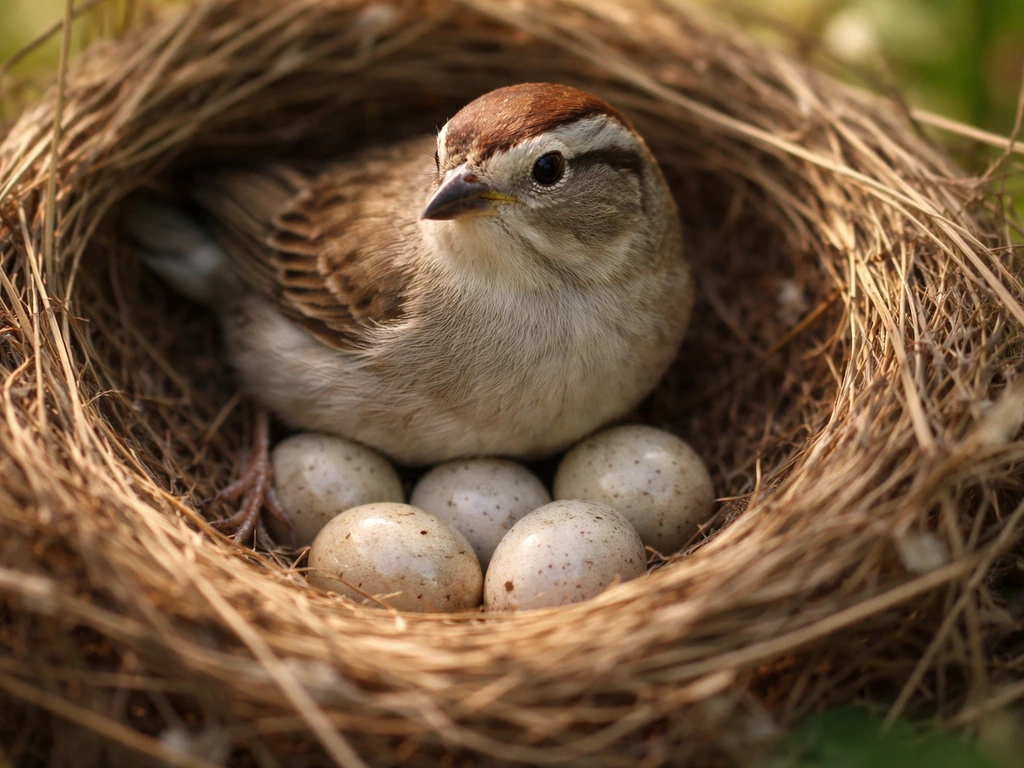
When a bird builds a nest near your home, it means one thing for certain in the natural world: breeding season is underway and that bird has chosen your space as a safe, resource-rich place to raise young. Spiritually and symbolically, across dozens of cultures and faith traditions, a nesting bird is one of the oldest signs of new beginnings, protection, and the nurturing of something precious. Both interpretations are worth holding at the same time, and this guide will walk you through how to read what you're actually seeing, what it might mean on a deeper level, and exactly what to do next. If you are wondering what it means when a bird roosts, the context around rest, safety, and location can matter a lot.
What Does It Mean When a Bird Builds a Nest?

Maya Hartwell
14 May 2026
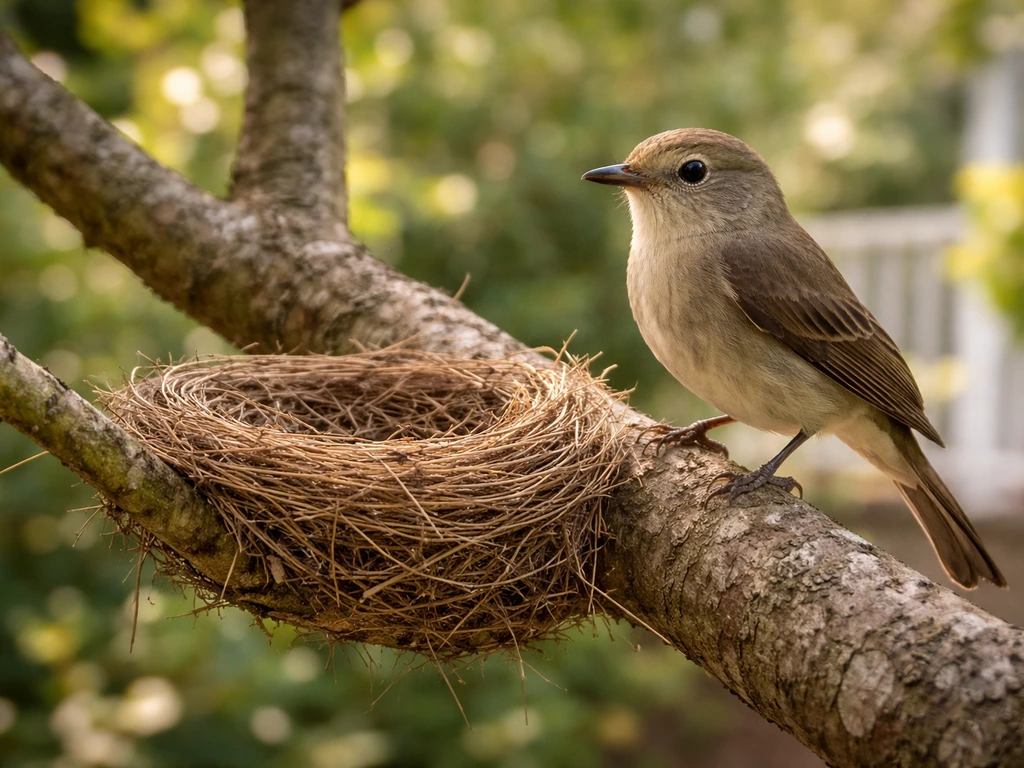
Why birds build nests: what's actually happening in nature
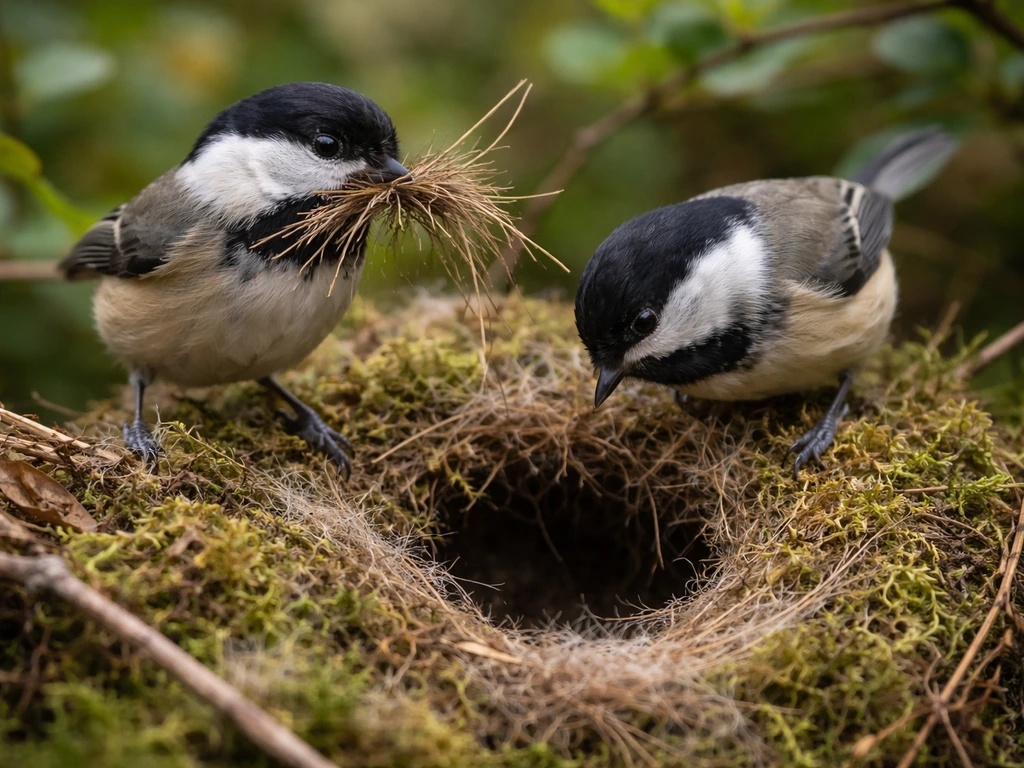
Birds build nests primarily to raise young. The nesting cycle includes mate attraction, courtship, nest construction, egg-laying, incubation, and parental care of chicks. When you spot a bird gathering materials and weaving them together, that bird is almost certainly preparing to lay eggs or already has a mate committed to the site.
The roles vary a lot by species. In some, both parents build together. Bald Eagles, for example, begin construction one to three months before egg-laying, and both parents work on the structure, sometimes completing it in as few as four days. In other species, males do most of the building as a form of courtship. The male Marsh Wren famously builds multiple 'dummy nests' and the female inspects them and picks the one she likes best. The Great Blue Heron works differently again: the male selects a nest site and displays there to attract a mate. So the act of building itself can mean the bird is still in the courtship phase, or well past it and already incubating.
Birds are also opportunistic about materials. Many will use human-made items like string, fabric scraps, or bits of plastic if they fit the size and texture they need. This is why you might notice a nest on your porch containing things that came from your own yard or home.
Reading the situation: species, season, location, and materials
Before jumping to any interpretation, natural or spiritual, it helps to identify what you're actually looking at. The nest's structure is your best first clue. Ornithologists classify nests into several basic types, and matching what you see to a category quickly narrows down the species.
| Nest Type | Description | Common Birds |
|---|---|---|
| Cup | Rounded bowl shape, often in tree branches or shrubs | Robins, sparrows, finches, warblers |
| Platform | Flat, wide structure, often large and bulky | Eagles, ospreys, herons |
| Cavity | Inside a hole in a tree, post, or nestbox | Chickadees, bluebirds, woodpeckers |
| Domed/Enclosed | Fully enclosed with a side entrance | Wrens, some sparrows, orioles |
| Scrape | Shallow depression on open ground | Killdeer, terns, shorebirds |
| Burrow | Tunnel dug into soil or a bank | Kingfishers, puffins, bank swallows |
Season matters too. Most songbirds in North America nest between April and August, with peak activity in May and June. If you're seeing active nest-building right now in mid-May, you're watching prime nesting season. Some species, like mourning doves, can nest multiple times in a season, so a late-summer nest isn't unusual for them. Location also tells a story: a nest tucked under your porch eave signals a species comfortable near humans (house finches and phoebes love this). A nest on the ground in your garden suggests a killdeer or similar ground-nester. A nest in a specific spot on your front door wreath or at your front entrance carries its own set of symbolic significance that many people find especially meaningful.
How to tell if the nest is active right now
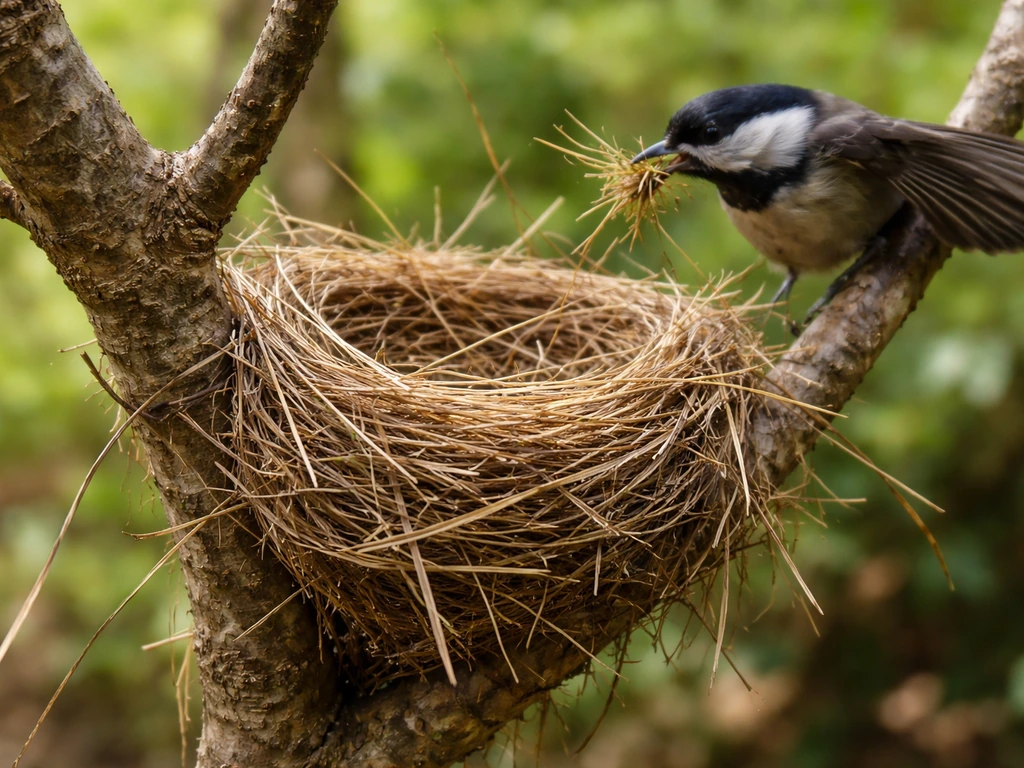
An active nest changes everything, both practically (you should not disturb it) and symbolically (the story is still unfolding). Here's how to read the signs without getting too close.
- Fresh materials arriving: if you see the bird still bringing twigs, grass, moss, or feathers, the nest is in the building or lining phase and eggs have likely not been laid yet.
- Adult sitting still on the nest: a bird sitting tight and barely moving is almost certainly incubating eggs. Incubation periods vary by species but typically run two to four weeks.
- Adults bringing food: if you see a parent arriving with insects or other food rather than nesting materials, chicks are present even if you can't see them.
- Multiple adults at the nest: most pairs take turns during incubation; one bird leaving briefly to feed while another arrives is a strong sign of an active nest.
- Calling from inside the nest: soft, persistent cheeping that seems to come from the nest itself means chicks have hatched.
- No adult seen for an extended period: NestWatch recommends waiting about four weeks from the last adult sighting before concluding a nest with eggs has been abandoned, to account for full incubation time.
If the nest is in a spot where you genuinely cannot see the contents, watch adult behavior through binoculars from a respectful distance. To understand whether the bird is in or on the nest, watch what it does after it lands sitting. Materials going in means building; food going in means chicks. That behavioral read is usually enough to know where in the cycle you are.
What it might mean spiritually and symbolically
Across cultures and throughout history, a bird building a nest near a home has been read as one of the most positive omens a person can receive. Bird building a nest in your house meaning is often tied to new beginnings, protection, and a season of nurturing that is unfolding right now. The themes are remarkably consistent regardless of tradition: new beginnings, careful preparation for something precious, protection of what is tender and not yet ready to face the world, and the patient commitment that real nurturing requires.
If you've been working toward something, a new project, a family decision, a creative endeavor, or a period of healing, a nesting bird arriving at this moment is often experienced as a confirmation. You're in a building phase. The nest is a reminder that meaningful things are constructed carefully, one piece at a time, and that the work itself is part of what makes the eventual outcome worthwhile.
The location adds nuance. A nest at your front door is widely interpreted as the threshold between the outside world and your private life being blessed or watched over. These interpretations are explored in depth for specific locations in related topics covering nests at the front door, on a door wreath, or outside a home generally meaning of bird nest at front door. If you're wondering about a bird nest in front of house meaning, the symbolism usually centers on protection at your threshold and a message of nurturing beginnings. A nest in a tree in your backyard feels more like quiet abundance arriving in your personal sanctuary. A nest built directly into a structure of your home, say a wall cavity or a window box, is often taken as a sign that family or domestic life is entering a new and fertile chapter. These interpretations are explored in depth for specific locations in related topics covering nests at the front door, on a door wreath, or outside a home generally.
Some metaphysical traditions read the species of bird as significant too. A robin's nest might carry themes of renewal and joy (robins are strongly associated with spring and new starts). A dove nesting near you is often interpreted as a sign of peace and divine blessing. An eagle nest carries connotations of power, vision, and elevated perspective. If you feel drawn to identify the species, that curiosity itself is worth following.
What the Bible, folklore, and other traditions say about nesting birds
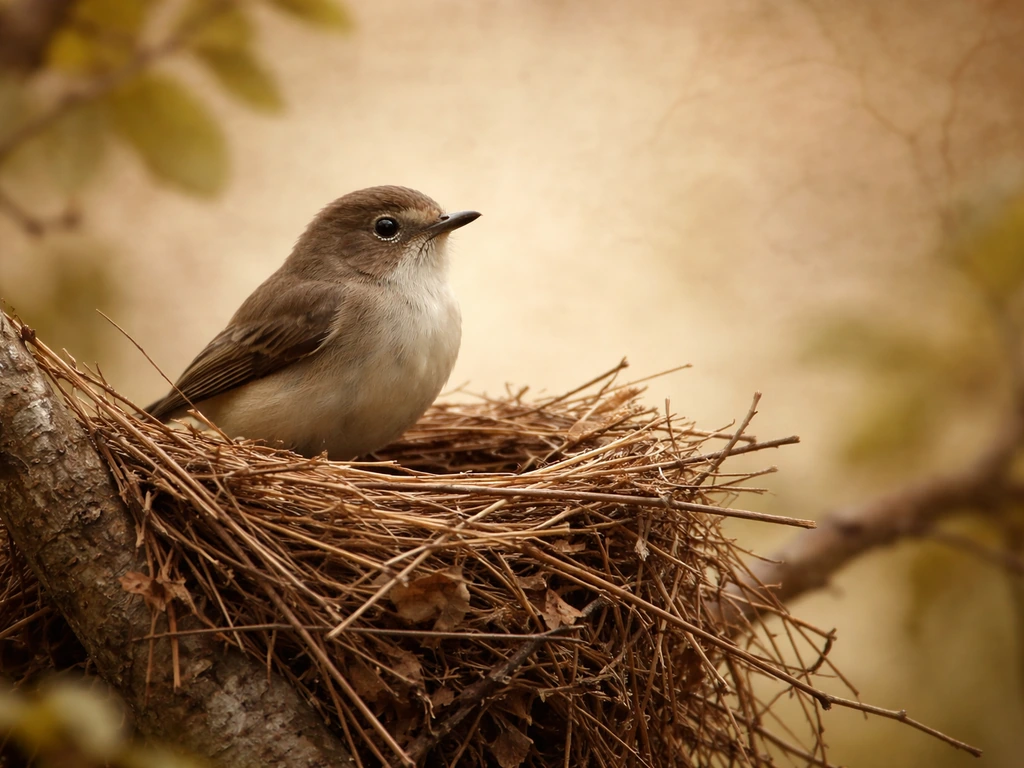
The image of a bird building a nest appears directly in scripture, and in ways that are genuinely moving. Psalm 104:17 describes birds building nests as part of the natural order that God tends and provides for. Psalm 84:3 goes further, describing even the sparrow and the swallow finding a home and a nesting place near God's dwelling, a passage often interpreted as a metaphor for anyone finding safety and belonging in faith. Deuteronomy 22:6 offers a practical and moral instruction: if you find a bird's nest with eggs or chicks and the mother is present, do not take the mother along with the young. The passage is remarkable for its specificity. It acknowledges the reality of finding nests and asks people to treat the nesting mother with compassion. If your spiritual frame is Christian or Jewish, there's a clear scriptural message here: nesting birds deserve protection, and encountering one is an opportunity to practice care.
In Celtic traditions, birds were considered messengers between the human world and the Otherworld, and a bird choosing to nest at your home was seen as a spirit companion settling in to watch over the household. Some Gaelic folk beliefs held that harming a nesting bird brought bad luck, while allowing it to nest brought prosperity and the safe arrival of children or new ventures.
In many Indigenous North American traditions, the act of nest-building is connected to the themes of home, belonging, and the cycles of life. Birds are often seen as carrying prayers or intentions upward, and a nest near a home is treated as a sign that the land recognizes the family living there as trustworthy stewards.
Eastern traditions, including some strands of Feng Shui, view birds nesting at or near a home as a sign that the space carries positive energy. A nest is seen as evidence that the environment is balanced and nurturing enough to support new life. In Japanese folklore, certain birds nesting near a house are considered harbingers of good fortune for the household.
What's striking is how little these traditions disagree. Across wildly different cultures and centuries, a bird choosing to build a nest near people is almost universally read as a positive sign, one tied to protection, fertility, patience, and the careful tending of what matters most. What meaning resonates most for you right now is worth sitting with.
How to observe safely without disturbing the nest
This is where spiritual curiosity and practical responsibility meet. Watching a nest is one of the most rewarding things you can do, but doing it right means the birds barely notice you're there.
- Use binoculars or a camera with a zoom lens. Stay at least 10 to 15 feet away if the bird is visible; more distance is better. Repeated close approaches stress the adults and can cause them to abandon the nest or attract predators.
- Observe briefly and at natural pauses. The best time is when the incubating adult has left briefly to feed. Keep visits to a few minutes.
- Never mark the area with ribbon, flagging tape, or anything colorful. It draws attention from predators and curious humans alike.
- Don't trim or clear the vegetation around the nest to get a better view. That cover is there for a reason and removing it exposes the nest to predators and weather.
- Don't handle eggs, chicks, or nesting material. Even well-intentioned handling can cause the adults to abandon the nest.
- Keep pets away. Dogs and cats near an active nest, even if they don't reach it, cause enormous stress to the adults.
- If the nest is in a high-traffic area of your home, try to minimize activity nearby and use an alternate route or entrance for the duration of the nesting cycle.
- Moderate photography is generally fine as long as you follow the above rules. Don't use flash at close range and don't linger.
A trail camera or security camera pointed at the nest from a safe fixed distance is an excellent option if you want to watch daily activity without repeated disturbance. Set it up once, at a respectful distance, and let it run.
When to call for help or take action
Most of the time, the right answer is simply to leave the nest alone and enjoy it. But there are situations where you need to know the legal landscape and when to involve a professional.
In the United States, most wild bird nests are protected under the Migratory Bird Treaty Act. This is not a technicality: it means that removing or destroying an active nest, meaning one with eggs or chicks, typically requires a permit from the U.S. Fish and Wildlife Service. A 2025 FWS policy memorandum affirms that destroying an in-use nest requires MBTA authorization. The safest rule is: if there are eggs or chicks in it, don't touch it without contacting your local wildlife authority first.
- The nest is in a location that poses a genuine safety hazard (blocking a gas vent, electrical panel, or fire escape): contact a licensed wildlife removal professional or your state wildlife agency before doing anything. They can advise on legal options.
- A chick has fallen from the nest: if the chick is feathered (a fledgling), leave it where it is; the parents are likely nearby. If it's a naked or barely-feathered nestling, you can gently place it back in the nest. The 'don't touch or the parents will reject it' belief is largely a myth, but repeated handling is still stressful.
- You suspect the nest has been abandoned: wait the full four weeks from the last adult sighting before concluding it's abandoned if eggs were present. Then you can remove it, as empty or clearly failed nests are generally not protected.
- You find a nest of an invasive, non-native species (European Starlings and House Sparrows are not protected by the MBTA): different rules apply. Contact your local Audubon chapter or wildlife agency if you're unsure.
- You're concerned about the bird's health or the nest is damaged: your local wildlife rehabilitator is the right call. You can find one through the National Wildlife Rehabilitators Association or by calling your state fish and wildlife agency.
What to do right now
If you're watching a bird build a nest today, here's a simple sequence. First, observe from a distance with binoculars and try to identify the nest type and species. Second, note whether the bird is still bringing materials (early building phase) or already sitting (incubating). For nests with eggs, allow blank" rel="noopener noreferrer">about 4 weeks from the last time you saw an adult at the nest before concluding it’s abandoned. Third, if the nest is near your home's entry point or in a high-meaning location for you personally, take a quiet moment to consider what's happening in your own life right now and whether the themes of building, nurturing, and new beginnings feel relevant. If the nesting is specifically on a door wreath, many people associate that with door-threshold protection and a meaningful new beginning at your front entrance bird nest on a door wreath. Fourth, set up a way to watch passively (a window view, a camera) so you can follow the whole cycle without disturbing it.
A nesting bird chose your space because it felt safe. That's worth something on its own, both as a biological fact and as a symbol. The nest is being built one careful piece at a time. What in your own life is asking for the same kind of patient, deliberate attention right now? When the bird is on the nest, that usually means the nest is active and the bird is guarding or incubating the bird is on the nest meaning. If you are wondering what a bird nest outside your house means, this moment is usually about new beginnings, protection, and caring for something precious.
FAQ
Does a bird building a nest near my home always mean it is about to lay eggs?
Not always. Some birds build and then reuse or repair the nest later, and some species start nest-building as part of courtship without immediate egg-laying. The clearest clue is behavior, if you consistently see the bird bringing food it usually indicates incubating or feeding young, while repeated trips with materials suggests construction is ongoing.
What if the bird keeps coming back to the same spot but I never see eggs or chicks?
It can still be an active nest cycle, eggs may be well hidden or the nest may be in a location you cannot view directly. Watch for patterns like the same adults visiting at regular intervals, and look for nest defense behaviors, such as frequent return trips or distraction flights. If you suspect the nest is present but you cannot confirm it, treat the area as active and avoid disturbance.
What should I do if the nest is in a dangerous place, like near a door I must use?
Avoid moving or removing the nest if eggs or chicks are present. Instead, change your routine temporarily, use an alternate entrance, and reduce foot traffic around the nest. If the location poses a safety or legal issue, contact a local wildlife rehabilitator or your municipality’s wildlife contact to discuss humane options.
Can I remove nesting materials, like string or plastic scraps, after the bird starts building?
Generally, no if the nest is active, because removing materials can cause abandonment or increase stress. If the bird used a human-made item, the best approach is to stop interfering and let the bird complete the structure. If the materials create a health hazard (for example, sharp plastic in a high-traffic area), consult a wildlife professional before touching anything.
Is it okay to mow or trim around the nest if I cannot see it?
Treat the area as off-limits. Many nests are concealed, so mowing can destroy eggs or chicks without you realizing it. A practical next step is to mark off a buffer zone around the suspected area and schedule landscaping only after nesting activity ends and the nest is clearly inactive.
How can I tell the difference between courtship building and an active incubating nest?
Courtship or early building typically involves frequent trips bringing nesting materials, you may see the bird weave, add, or reposition items. Incubation or feeding is suggested when the bird stays on or near the nest more often, and you see fewer material-carrying trips and more longer stays. If you can only observe from distance, track which type of activity is dominant over a day or two.
What does it mean spiritually if the nest is at my front door or on a wreath?
Many people interpret a front-door placement as a focus on boundaries and protection around your home life. A wreath placement specifically is often read as an emphasis on a “threshold season,” the moment something new enters your household. If you prefer a practical spiritual approach, treat it as a prompt to create calm and stability at your entrance, for example, reduce rush and make room for nurturing.
If I want to help, what are safe ways to support nesting birds without disturbing them?
You can support them by keeping pets indoors, limiting human activity around the nest, and ensuring nearby hazards are minimized, like turning off outdoor fans near the nest or avoiding sudden lights at night if the species is sensitive. Providing water in a safe location away from the nest can help indirectly, but do not set up feeding stations right at the nest area, since that can attract attention and increase stress.
Do I need to worry about legality even if the nest is not on my property line?
Yes. In many places, nests containing eggs or chicks are protected, and the protections often apply regardless of whether the nest is on private property or adjacent land. In the U.S., the Migratory Bird Treaty Act commonly restricts disturbing active nests and typically requires permits for removal or destruction. If you are unsure, contact your local wildlife agency before taking any action.
What’s the best way to watch the nest without causing harm?
Use passive observation methods. Binoculars from a respectful distance are a start, and setting up a camera once is better than repeated visits. Avoid zooming in with your face close to the nest, avoid flash photography, and stop if adults show signs of agitation like repeated loud calls, frantic darting, or sustained circling.
How long will a nest likely be active?
It varies by species, but many nests are active for weeks from construction through raising young. The practical way to manage expectations is to observe the cycle cues, when material trips stop and the adults mostly stay and feed from longer stays, and then later when young are visible or the adults reduce time at the nest. If the nest becomes empty, you can reassess timing for any area maintenance.
Next Article
The Bird Is on the Nest Meaning: Literal and Symbolic
Meaning of the bird on the nest, from literal nesting and guarding to spiritual omens, plus safe next steps.