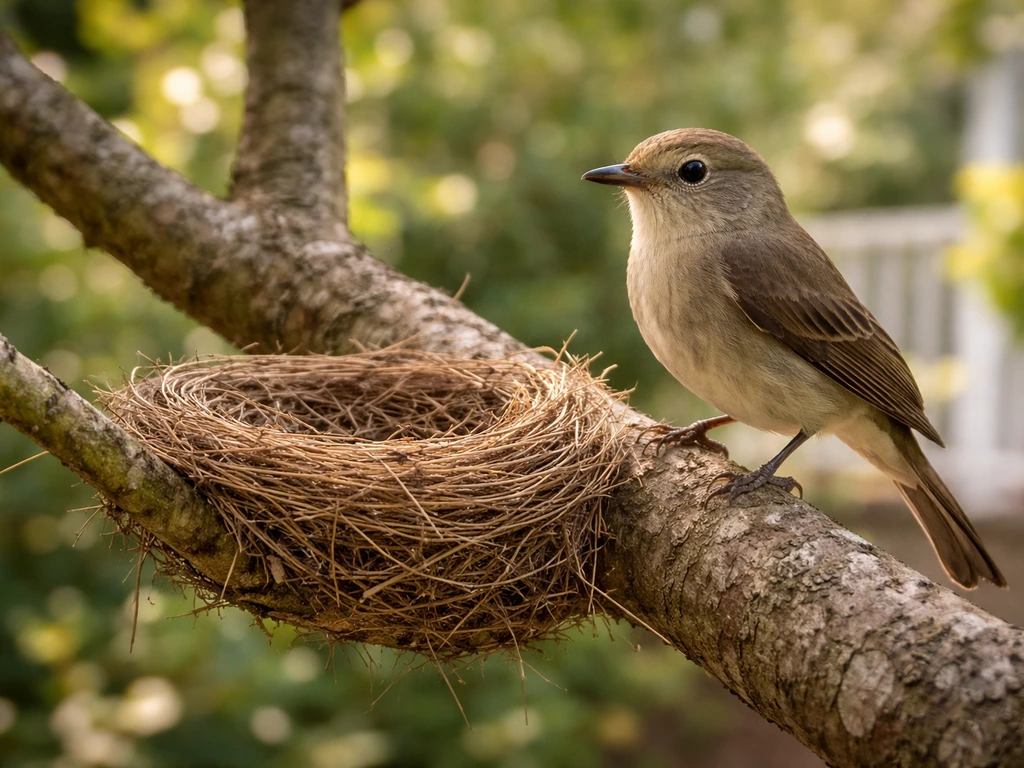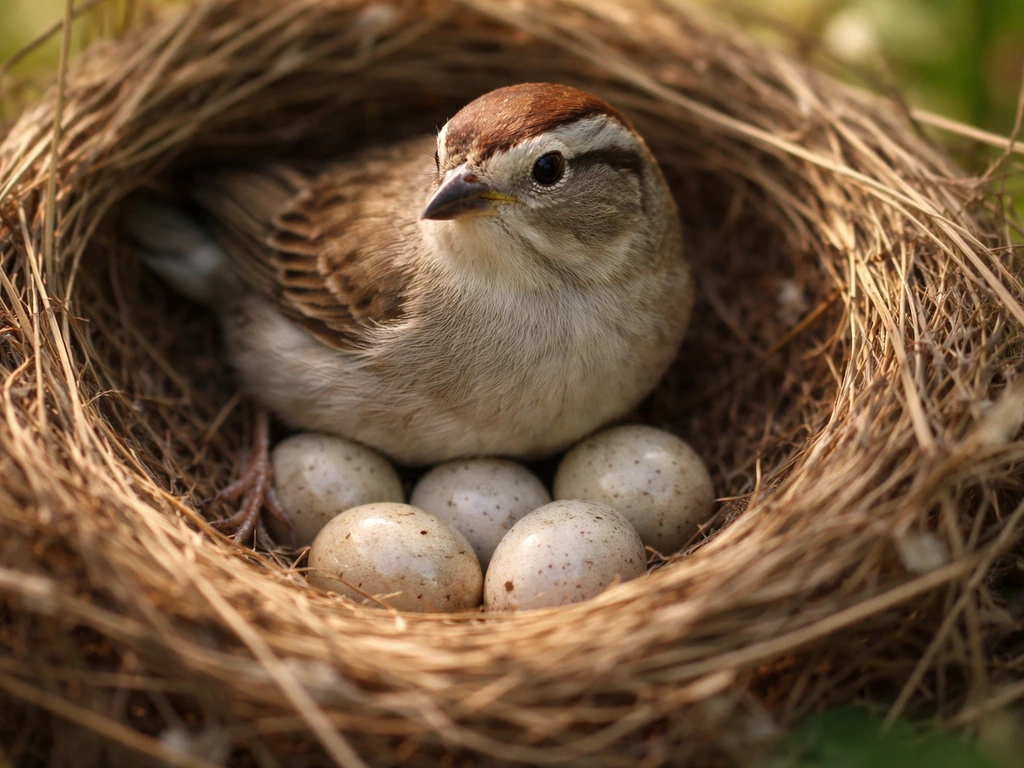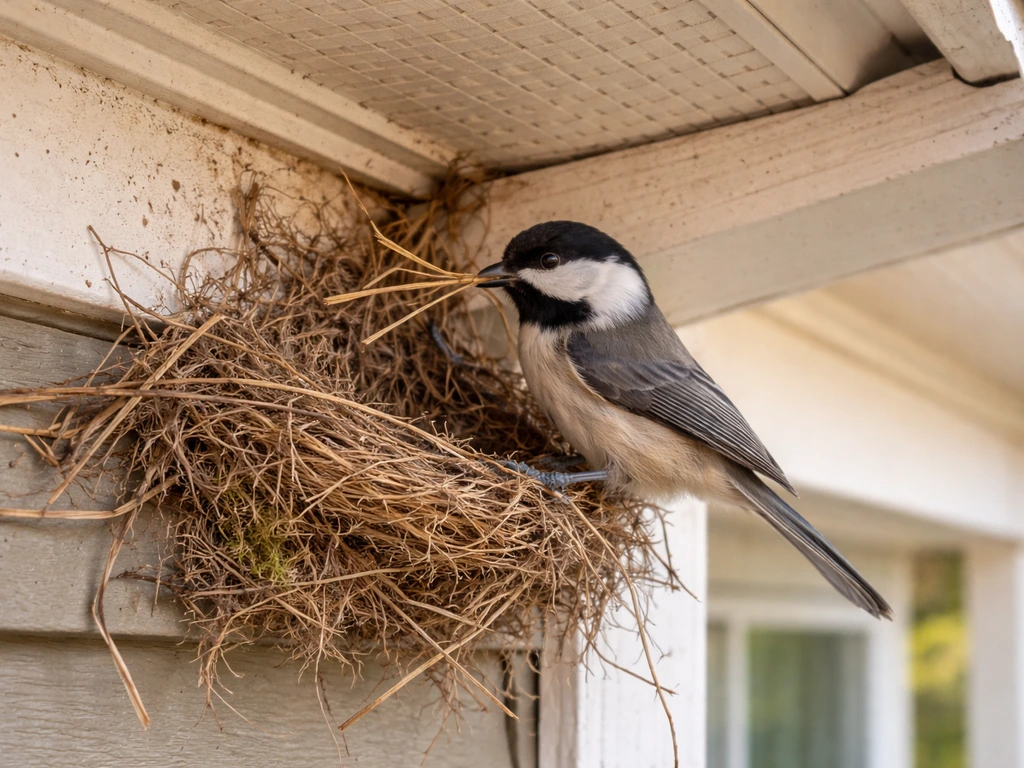
If a bird is in or on the nest near your home right now, the most likely explanation is completely normal: an adult is incubating eggs, brooding young, or simply resting close to the nest. Roosting often means the bird is settled in a safe place, which can be normal behavior depending on the species and context what does it mean when a bird roosts. This is exactly what birds are supposed to do. Before you do anything, take a breath. Most of the time, the best action is to step back and leave the bird alone. That said, there are real situations where something has gone wrong, and knowing how to tell the difference quickly is what this guide is here to help with.
The Bird Is In or On the Nest: What To Do Next

Maya Hartwell
23 May 2026
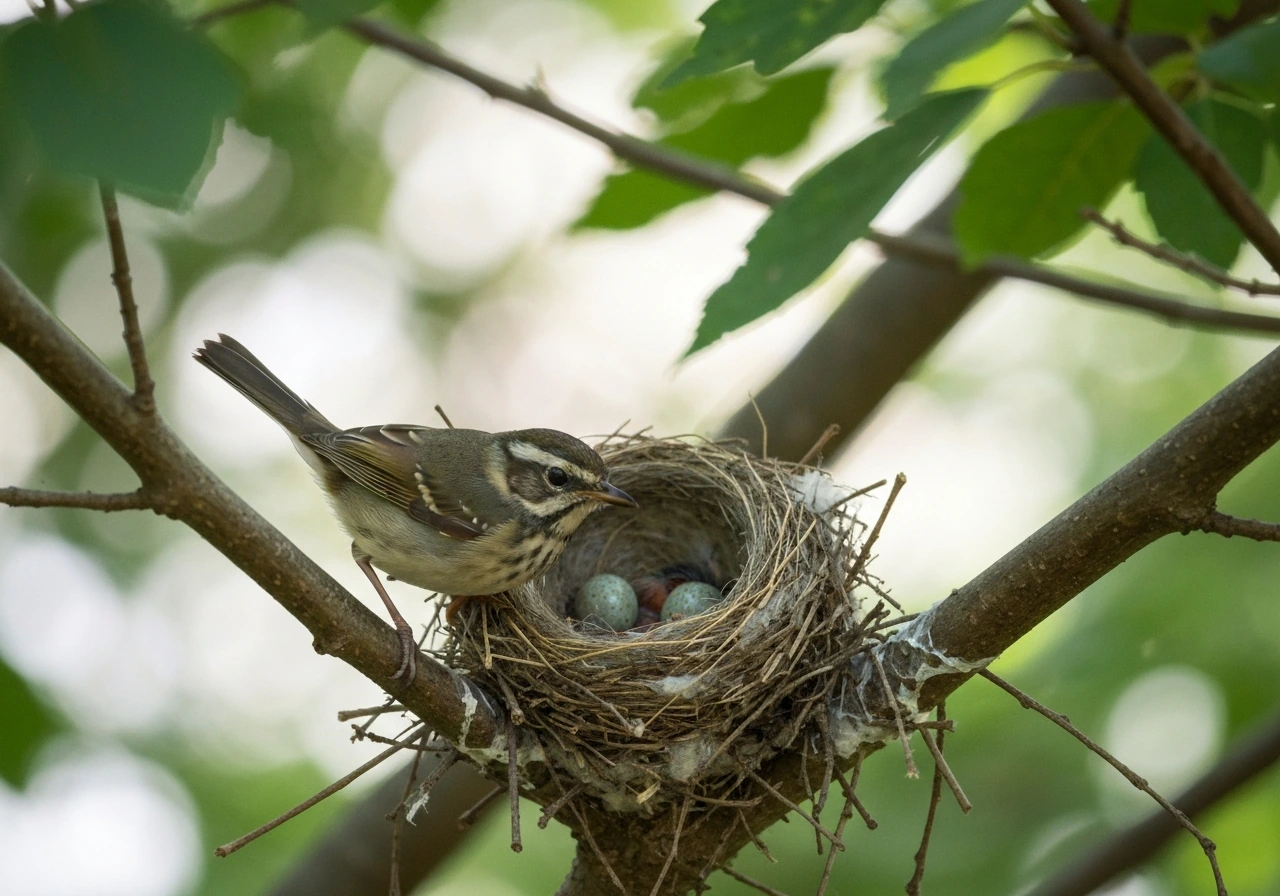
Quick reality check: what it likely means when a bird is in or on the nest
In the vast majority of cases, a bird sitting in or on a nest is doing exactly what nature intended. During incubation, the parent bird stays on the nest to keep eggs at the right temperature, moving as little as possible to avoid drawing attention from predators. If you walk close to an active nest, the sitting bird may flush and fly away, which can look alarming, but it will almost always return once you move away. Songbirds typically incubate eggs for around 11 to 14 days, and once the eggs hatch, nestlings stay in the nest for roughly 10 to 20 more days before fledging. So if you are watching a nest and wondering why the bird seems permanently parked there, that is exactly what is happening: it is doing the slow, patient work of raising young.
A trickier situation is when you do not see the adult at all and start to worry the nest has been abandoned. Here is an important rule of thumb from NestWatch: wait about four weeks from the last time you saw an adult before concluding the nest is truly abandoned. Parents do not sit on the nest every minute of every day, especially when feeding nestlings. They are often gone gathering food, and their absence for hours at a time is completely normal. The nest looking quiet does not mean it has been deserted.
Immediate actions to take today
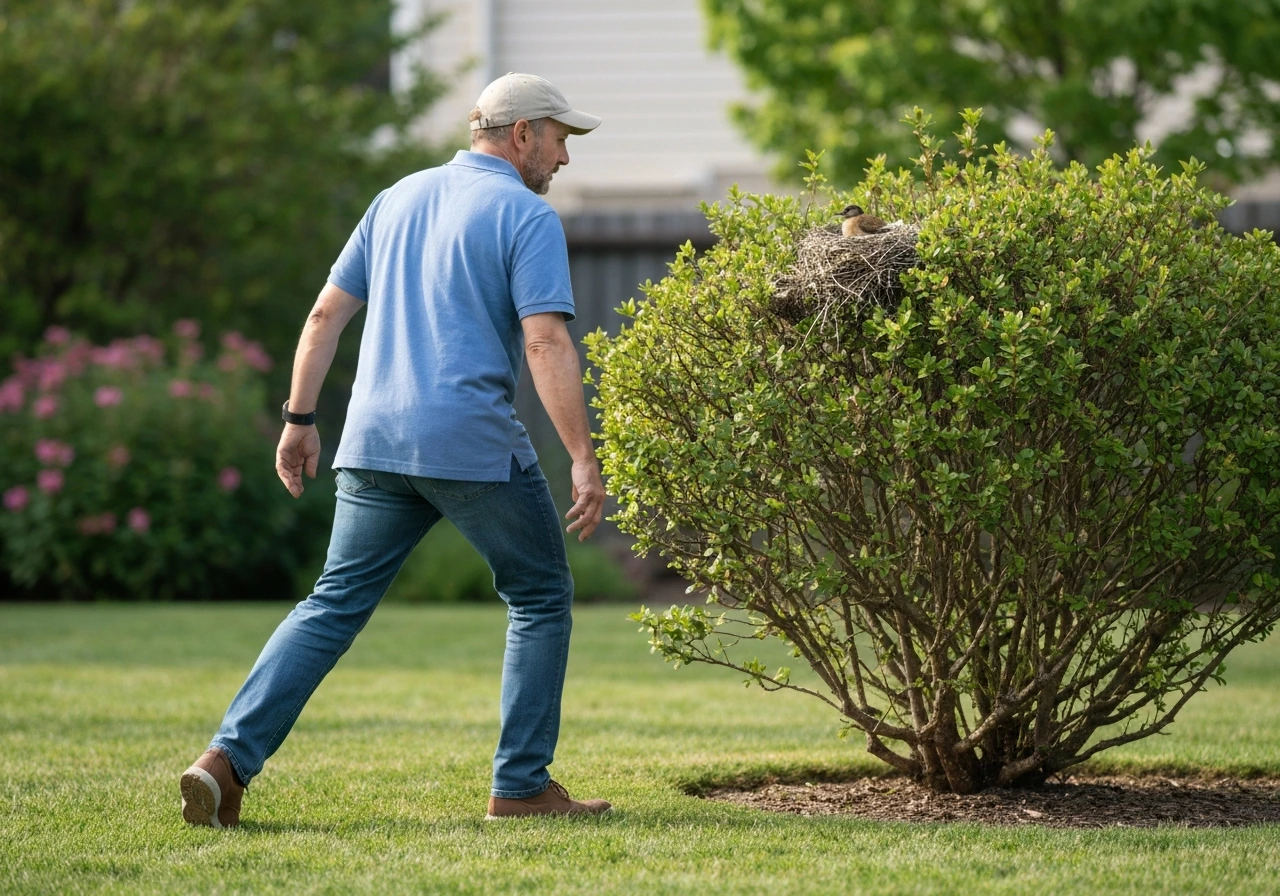
The first thing to do is also the easiest: move away from the nest. Whether you stumbled across it in a shrub, spotted it on a ledge, or noticed it on a door wreath, your proximity is already causing stress to the bird. If you are wondering about the bird nest on door wreath meaning, the same idea often applies: it can symbolize protection and a new season of care in many traditions noticed it on a door wreath. Give it at least 10 to 15 feet of space, ideally more. Here is what to do right now:
- Step back quietly and calmly. Do not make sudden movements or loud noises near the nest.
- Keep children and pets away from the area immediately. Dogs and cats are a real danger to nesting birds and fledglings, and even a brief encounter with a pet can require a call to a wildlife rehabilitator.
- Do not touch the nest, the eggs, or any bird in or near it unless there is an obvious and urgent life-threatening emergency (like a bird trapped in netting or severely injured).
- Do not try to feed or give water to any nestling or young bird you see in or near the nest. This advice comes directly from Audubon and the Wildlife Center of Virginia: well-meaning feeding can actually harm young birds.
- Observe from a distance, ideally from indoors through a window, so you can assess the situation without adding stress.
- Note what you see: Is the adult bird present? Are there nestlings visible? Does the bird or nest appear physically damaged or displaced?
If the bird appears uninjured and the nest is intact, your job right now is mostly to get out of the way and watch quietly. That alone is the right answer most of the time.
How to identify the bird and nest type, and whether this is normal or urgent
Knowing what kind of bird you are dealing with changes everything. A robin sitting low on a mud-and-grass cup nest in a shrub is in a very different situation than a tiny hatchling on the edge of a nest with no adult in sight. Here is a practical way to assess what you are seeing:
Look at the bird's stage
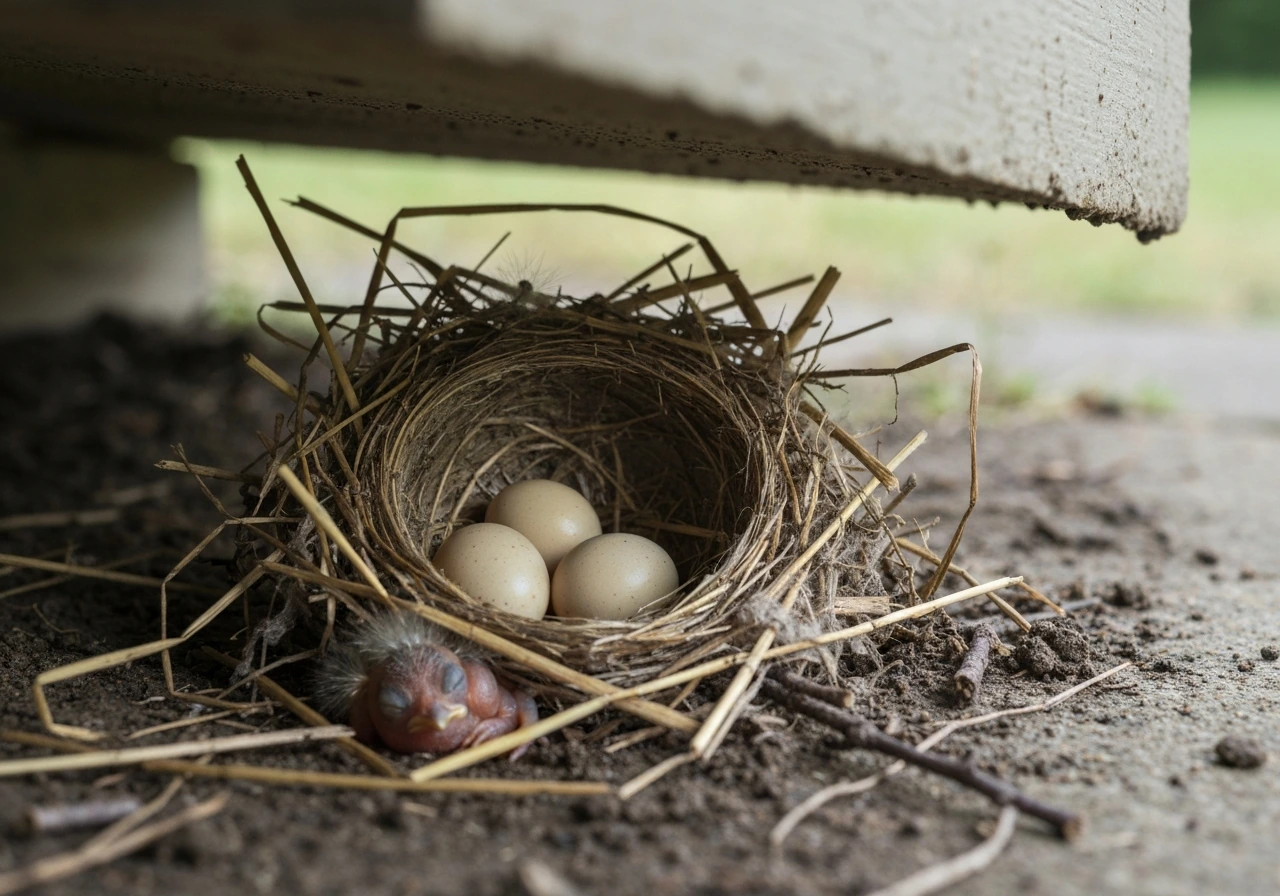
- Egg stage: Adult is likely incubating. Normal. Leave it alone.
- Nestling (eyes closed, few or no feathers, clearly helpless): Should be in the nest with a parent nearby. If the bird is out of the nest at this stage, that is a concern worth investigating.
- Older nestling or brancher (feathered but not yet fully capable of flight, may be on nest edge): This is a natural transition. Parents are often nearby and still feeding.
- Fledgling (fully feathered, hopping around near the nest): This is normal behavior. The bird is learning to fly. Do not return it to the nest.
- Adult bird on the nest: Almost certainly incubating or brooding. Normal.
Signs that something may be wrong
- A very young nestling is on the ground with no adult anywhere nearby after you have watched for 30 to 60 minutes from a distance.
- The bird is visibly injured: drooping wing, bloody wound, eyes closed and unresponsive.
- The nest itself has fallen, been knocked loose, or is in imminent danger (storm damage, construction, a pet attack).
- A pet has made physical contact with the bird.
- The bird is cold to the touch (a cold nestling should not be returned to the nest, per the Wildlife Center of Virginia, as parents may reject it).
- You have not seen any adult visit the nest in more than a day or two and eggs or young nestlings are present.
To identify the species, use a free app like Merlin Bird ID (Cornell Lab of Ornithology) or iBird. A quick photo from a safe distance is usually enough to get a match. Knowing the species also helps you look up typical incubation and fledging timelines using Smithsonian's Neighborhood NestWatch calendar, which gives species-specific nest cycle data for common North American birds.
How to help without interfering: what to do based on the situation
Not every bird-in-or-on-a-nest scenario calls for the same response. Here is a conditional breakdown based on the most common situations people encounter.
Adult bird on the nest, eggs or young present
This is the simplest case. Do nothing. Keep the area quiet, keep pets and children away, and observe from a distance. The Migratory Bird Treaty Act (MBTA) in the US makes it illegal to disturb an active nest containing eggs or chicks, so the law and good sense point the same direction: leave it alone. If the nest is somewhere inconvenient for you (on a door wreath, over a doorway, in a high-traffic spot), Audubon's recommendation is clear: wait it out. The entire nesting cycle from first egg to fledging is typically just a few weeks.
Nestling out of the nest but uninjured
If a nestling (not a fledgling) has fallen out of the nest and you can see the nest clearly and reach it safely, you can gently place the bird back. The phrase "the bird is on the nest" is often summarized as the bird’s behavior meaning stability and care for its eggs or young the bird is on the nest meaning. The old myth that parent birds will reject a nestling you have touched is just that: a myth. Birds have a very limited sense of smell and will not abandon their young because a human handled them. However, if a pet has made contact with the bird, call a wildlife rehabilitator before doing anything, even if the bird looks fine. Cat and dog bacteria can cause serious infections in birds that are not immediately visible.
Bird appears injured
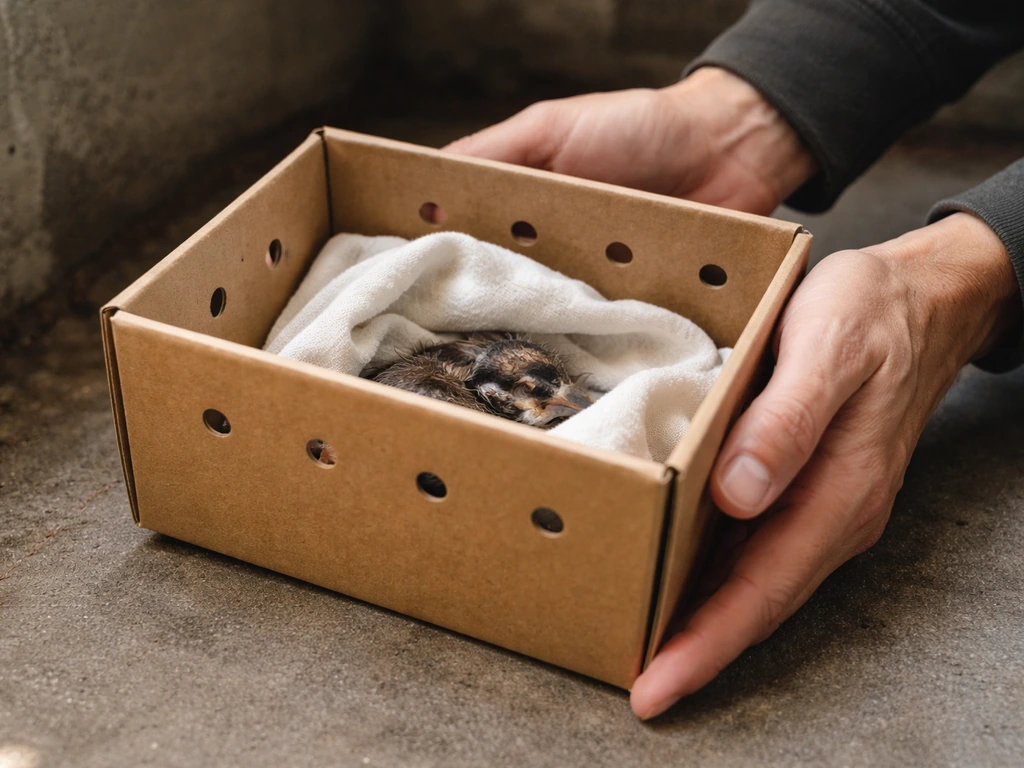
If the bird is clearly injured (broken wing, blood, completely unresponsive), contain it gently in a cardboard box with air holes, place it somewhere quiet and dark, and call a local wildlife rehabilitator immediately. Do not attempt to treat injuries yourself. Do not offer food or water. Keep the box away from pets, direct sunlight, and drafts while you make the call. A quick internet search for your county plus 'wildlife rehabilitator' or using the National Wildlife Rehabilitators Association finder will get you a local contact fast.
Nest is threatened or displaced
If a nest has fallen (from wind, a branch coming down, construction activity) and contains eggs or live nestlings, contact a wildlife rehabilitator or your local nature center before moving it. In some cases a nest can be placed back in a secure location nearby, but this needs expert guidance. Moving a nest on your own without professional input may violate the MBTA and could result in the parents abandoning the nest entirely. In the UK, the Wildlife and Countryside Act 1981 similarly makes it illegal to move an active nest, so the protective framing applies internationally.
Possible abandonment
If you suspect the nest has been abandoned, follow the four-week rule from NestWatch: wait about four weeks from the last confirmed adult sighting before acting. If after that time the eggs have not hatched and show no sign of development, the nest is likely genuinely abandoned and you can then remove it if needed (once it is confirmed inactive). Do not disturb the nest during that waiting period.
What to expect over the coming days and weeks
Understanding the typical nesting timeline helps you stay calm and monitor without overreacting. For most songbirds in North America:
| Stage | Typical Duration | What You'll See |
|---|---|---|
| Incubation (eggs) | 11 to 14 days | Adult on nest most of the time; may flush briefly |
| Hatching | Within 24 to 48 hours per clutch | Adult stays very close; may become more defensive |
| Nestling stage | 10 to 20 days depending on species | Rapid feeding activity; adults visiting nest frequently |
| Fledging | 1 to 2 days of transition | Young birds hopping near nest; adults still feeding them |
| Post-fledge | Up to several weeks | Young birds in nearby vegetation; adults still nearby |
Monitor from a distance and resist the urge to check the nest up close. Audubon emphasizes that if you are standing right next to the nest, the parents will stay away until you leave. Every time you approach, you are delaying feeding and adding stress. A quick visual check from 15 or more feet away, once or twice a day, is all you need to track progress without causing harm.
What it means spiritually: the bird in or on the nest
If you have found yourself drawn to this moment, watching a bird settled into its nest outside your window or near your door, many traditions would say that is not accidental. If you are wondering about the bird nest outside your house meaning, it is often tied to themes of home, protection, and right timing bird nest outside my house meaning. Across cultures, the image of a bird in the nest carries layered and often deeply personal symbolism. It is worth sitting with these interpretations and seeing which, if any, resonate with where you are in your own life right now.
Protection, home, and stability
In many folk traditions across Europe and North America, a bird nesting on or near a home is considered a sign of good fortune, protection, and domestic blessing. If you are also wondering about the bird nesting right at your entryway, you may find the bird nest in front of house meaning perspective a useful comparison. If you are wondering what a bird building a nest in your house means, this guide can help you interpret the situation without panic. The nest itself is a universal symbol of home, safety, and the deliberate building of something lasting. Celtic tradition in particular held birds as messengers between worlds, and a nesting bird near the home was often seen as a guardian presence. If you have been thinking about home, family, or the concept of sanctuary recently, this encounter may feel especially pointed.
New beginnings and patience
The act of incubation, a bird sitting still on something that has not yet become what it will be, is rich with meaning for anyone in a period of waiting or transition. In many Eastern and indigenous traditions, birds nesting symbolize the patient, faithful nurturing of something new. You cannot rush what is inside the egg. If you are in the middle of a creative project, a relationship in early stages, or a life change that feels slow, the bird on the nest is a quiet reminder: some things unfold on their own timeline.
Biblical and spiritual symbolism
In biblical tradition, nesting birds carry specific resonance. Psalm 84:3 speaks of the sparrow finding a house and the swallow a nest for herself near the altar, linking the nesting bird directly to divine shelter and belonging. Deuteronomy 22:6 also specifically addresses encountering a bird on a nest, instructing care and restraint. Across these texts, the nesting bird is treated as something deserving of respect, and its presence near a dwelling is connected to themes of blessing and right relationship with the natural world.
A message worth reflecting on
You might also find it worth exploring related encounters in this space. Whether the bird built its nest near your front door, on your door wreath, or whether this is an adult bird you have noticed roosting nearby, each of these variations carries its own nuanced layer of meaning. The common thread across traditions is this: the bird chose to be here, near you, near your home. What might that mean to you, right now, in this season of your life? That question is yours to answer.
What not to do, and when to call a professional
Some of the most well-intentioned responses to finding a bird in or on a nest actually cause harm. Here is a clear list of what to avoid:
- Do not move an active nest. This is illegal under the MBTA (US) and the Wildlife and Countryside Act (UK) when the nest contains eggs or dependent young.
- Do not block access to the nest. Even if the nest is in an inconvenient spot, cutting off the parent's path to the nest can cause abandonment.
- Do not handle adult birds without training or explicit guidance from a rehabilitator.
- Do not feed nestlings or fledglings, even if they look hungry. Incorrect food can injure or kill them.
- Do not return a cold baby bird to the nest. A cold nestling may be rejected by the parents and could compromise the other young in the nest.
- Do not let pets investigate the nest or any bird near it, even briefly.
- Do not assume the nest is abandoned because you have not seen the adults for a few hours or even a day.
When to call a wildlife rehabilitator

Call a licensed wildlife rehabilitator if any of the following are true:
- A nestling (not a fledgling) is on the ground and you cannot find or safely reach the nest to return it.
- A pet has made physical contact with any bird in or near the nest.
- The bird is visibly injured: bleeding, broken limb, unable to hold its head up, eyes closed and unresponsive.
- A very young nestling is cold to the touch.
- The nest has been destroyed or severely displaced and eggs or live young are exposed.
- You are unsure of the bird's life stage and the bird looks compromised in any way.
- The adult bird has not returned to the nest in more than 24 hours and eggs or young nestlings are present.
To find a licensed rehabber near you, search the National Wildlife Rehabilitators Association directory online or call your state's fish and wildlife agency. Most will give you triage guidance over the phone before you even need to bring the bird in. Getting that call right is almost always the best step you can take when you are not sure what to do next.
FAQ
How can I tell if the bird is just brooding or if something is wrong?
Use distance and behavior, not guesses. If the bird is alert, feathers are intact, and it is repeatedly returning to the same spot after you back away, it is usually caring for eggs or young. If you see continuous drooping, heavy panting or open-mouth breathing, bleeding, or the bird cannot right itself, treat it as injured and contact a wildlife rehabilitator.
Should I leave food or water near the nest to help the parents?
Do not put food out to “help.” Adult birds may still be doing normal incubation or brooding, and food can attract pests that increase risk at the nest. If the situation involves nestlings, the best help is creating distance, keeping pets away, and calling a rehabilitator if you suspect injury, abandonment, or a fallen nest.
What if I only see the bird once (or never see the adult), does that mean the nest is abandoned?
The best approach is to get eyes on it from far away and watch for adult visits. A single sighting does not prove abandonment, and a long gap does not automatically mean the nest is deserted. If you have not seen an adult for several hours, keep monitoring and apply the four-week rule from the last confirmed adult sighting before concluding abandonment.
What signs can I look for to confirm the nest is active without disturbing it?
From a safe distance, you can check for “active” signs like adults coming and going, begging calls from nestlings, subtle head movements, or fecal sacs after feeding. Avoid touching eggs or nest materials. For a quick check, use binoculars or a zoom camera, and stop immediately if the adults start flushing repeatedly.
If a nest fell due to wind or construction, can I just put it back and be done with it?
Calling is the right move, especially if the bird is on a high or unsafe surface, the nest was knocked down, or you cannot securely return nestlings. Rehabilitators can also advise whether any local permits are needed, and they can determine whether the chicks are developmentally ready to be placed nearby.
Can I rebuild the nest or patch it if it looks broken?
If a nestling has fallen, and you can reach it safely, you can gently return it to the nest, but do not improvise repairs. Do not add glue, twigs, or extra lining. If you cannot place it reliably, or if the nest is damaged or out of reach, contact a wildlife rehabilitator instead.
My cat or dog got near the bird. What should I do right now?
If a pet has bitten or scratched the bird, do not assume it is fine. Call a rehabilitator because cat and dog bacteria can cause serious illness even when injuries are not obvious. In the meantime, keep the bird contained in a quiet, dark box only if it is injured or unmanageable, and avoid handling beyond necessary containment.
The nest is on my door wreath or near my entryway, how do I protect it while still using my door?
If the nest location is on a door wreath, it is better to pause your routine rather than remove it. Wait it out and keep traffic down. If you must close access for safety (for example, preventing pets from reaching it), use temporary barriers that do not involve moving the nest or repeatedly approaching the entrance.
How long should I wait after I step back before checking again?
If you are outside the house, the timing can be tight. After moving away, many sitting birds will return quickly once they feel safe, usually within minutes to an hour, depending on species and disturbance level. If the bird does not return after a substantial break, or if you suspect injury, call a rehabilitator rather than repeatedly approaching to force a return.
When can I remove an old nest from my property?
If the nest is truly inactive, you should avoid removing it right away because you could interrupt a later attempt or remaining chicks. Confirm inactivity first, use the four-week waiting window from the last adult sighting, and only then remove it in a way that prevents reuse (for example, cleaning and deterrents).
Does the legal advice differ if I am outside the United States?
Yes, law and safety vary by location. In the US, disturbing active nests is generally restricted under the Migratory Bird Treaty Act, but enforcement and exceptions differ by state and circumstance. If you are outside the US, check your local wildlife authority or call a rehabilitator for guidance before moving anything.
What does “the bird is in or on the nest” actually imply in practical terms?
“The bird is on the nest” most often means the bird is performing incubation or guarding young. It does not automatically mean abandonment, and it does not indicate danger by itself. The key decision points are whether eggs or chicks are present, whether adults are returning, and whether there are injury or nest damage cues.